Supreme Mechanical provides expert HVAC installation, repair, and maintenance services for homes and businesses.
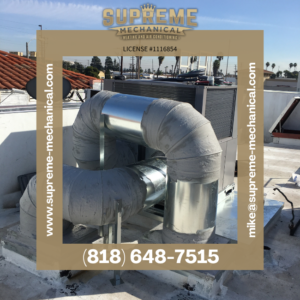
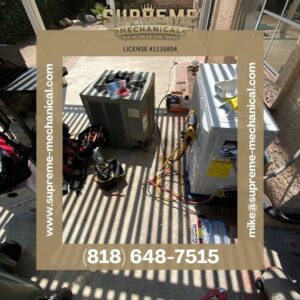

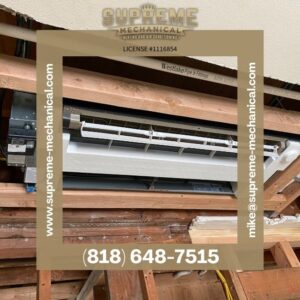
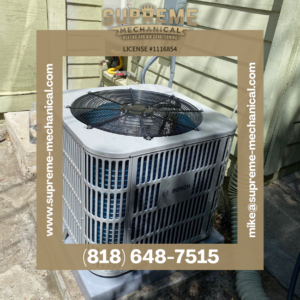

Fast, accurate diagnostics to keep Winnetka businesses running through San Fernando Valley heat
When a rooftop unit stops cooling or a commercial system behaves erratically at a Winnetka retail corridor property, every hour of downtime costs money. Commercial HVAC diagnostics pinpoint the exact fault — compressor, controls, refrigerant circuit, or airflow — before a full breakdown forces closure. Local providers serving Winnetka's densely packed neighborhood businesses can typically respond same day to minimize disruption.
Commercial HVAC diagnostics is a structured inspection and testing process applied to the heating, cooling, and ventilation equipment in business properties — strip mall storefronts, office suites, restaurants, and multi-tenant buildings. In Winnetka, a western San Fernando Valley neighborhood sitting at roughly 1,000 feet elevation, summer temperatures regularly push into the high 90s and triple digits, putting sustained strain on rooftop package units and split systems that serve the area's retail and small-business corridors. A diagnostic visit uses refrigerant pressure gauges, airflow meters, electrical multimeters, and control-board scanners to isolate why a system is underperforming. The findings give property managers and business owners a clear repair path rather than guesswork. Given Winnetka's largely mid-20th-century commercial building stock, aging ductwork and legacy equipment configurations are common complicating factors technicians must account for during assessment.
A commercial diagnostic is more than a visual check. Certified technicians systematically evaluate every major subsystem — refrigerant charge, compressor operation, condenser and evaporator coils, blower motors, economizers, thermostats, and electrical controls. For rooftop units, which are the dominant equipment type on Winnetka’s flat-roofed retail buildings along corridors like Winnetka Avenue and Roscoe Boulevard, technicians also assess curb seals and drain pans that the intense Southern California sun degrades over time.
Winnetka’s population density — over 13,000 residents per square mile — means commercial spaces serve high foot traffic daily. A restaurant or medical office losing cooling during a July heat event in the Valley isn’t just uncomfortable; it can trigger health code concerns or force a temporary closure. Early diagnostics catch refrigerant leaks, failing contactors, and clogged coils before they cascade into compressor replacements.
Most commercial HVAC providers covering Winnetka offer early-morning or after-hours diagnostic appointments to avoid disrupting business hours. With the neighborhood sitting about 22 miles from Downtown LA, locally based San Fernando Valley contractors typically reach Winnetka addresses faster than firms dispatching from central Los Angeles, which matters when a system fails on a 100-degree Valley afternoon.
A diagnostic visit produces a condition report and repair recommendation — it is not the repair itself. This distinction matters for budgeting: property managers receive a written scope before committing to parts and labor, which supports vendor comparison and capital-expense planning for multi-unit retail or office portfolios in the area.
Understanding when to call an expert can save you time, money and prevent bigger problems down the line.
Not every HVAC complaint requires an emergency repair call, but certain patterns signal that a formal diagnostic is the right first step rather than a band-aid fix. Winnetka business owners and property managers should schedule a diagnostic when any of the following occur:
Proactive diagnostics scheduled before Winnetka’s May-through-October cooling season also help businesses avoid the long technician backlogs that form during heat waves across the San Fernando Valley. Learn more about what licensed contractors offer across the full spectrum of HVAC services available through this directory.
Supreme Mechanical provides expert HVAC installation, repair, and maintenance services for homes and businesses.
Signs You Need This Service
Uneven Temperatures Across the Space
When one zone of a Winnetka retail or office space stays significantly warmer than another, it often points to duct leaks, a failing zone damper, or an undersized unit struggling against Valley heat loads. A diagnostic pinpoints which component is the source.
System Running Constantly Without Reaching Setpoint
A commercial unit that never satisfies the thermostat during a San Fernando Valley afternoon likely has a refrigerant charge issue, a dirty condenser coil baked by direct sun exposure, or a compressor nearing end of life.
Unusual Odors or Sounds
Burning smells suggest an electrical or motor issue; musty odors often indicate standing water in a drain pan or microbial growth in ductwork common in Winnetka's older commercial buildings. Either warrants immediate diagnostic inspection.
Unexplained Spike in Energy Costs
A sudden increase in a Southern California Edison commercial bill without a change in business operations is a strong indicator of equipment inefficiency that diagnostics can quantify and trace to a specific component.
Frequent Breaker Trips or Electrical Faults
Commercial HVAC equipment drawing excess amperage will trip circuit breakers repeatedly, signaling a compressor winding failure or a failing capacitor that diagnostics can confirm with electrical testing.
A single rooftop package unit on a Winnetka strip mall storefront takes less time to evaluate than a multi-zone split system or a chilled-water plant serving a larger commercial building. More complex systems require more testing points and drive higher diagnostic fees.
Older rooftop units on mid-century Winnetka commercial buildings may lack modern diagnostic ports, requiring technicians to use additional adapters or spend more time accessing components, which affects labor time.
Property managers overseeing multi-tenant retail centers on Winnetka's commercial corridors will pay more for diagnostics covering multiple independent systems than a single-unit assessment, though bundled visits often reduce per-unit cost.
Businesses that cannot shut down for daytime service — restaurants or medical offices, for example — may need early-morning or weekend diagnostic appointments, which typically carry a premium over standard weekday rates.
Systems using refrigerants being phased out under California regulations, or units with proprietary control boards, may require specialized tools or manufacturer-trained technicians, adding to the overall diagnostic cost.
The technician walks the property, identifies all HVAC equipment — typically rooftop units, air handlers, and thermostats — and reviews any available service history. For Winnetka commercial properties, this often surfaces legacy equipment installed during the neighborhood's mid-20th-century buildout.
Using a multimeter and manufacturer wiring diagrams, the technician checks contactors, capacitors, control boards, and thermostat signal wiring to identify any electrical faults or communication errors in the control circuit.
Manifold gauges are connected to measure suction and discharge pressures against manufacturer specifications, revealing low charge conditions, overcharge, or restriction issues that reduce cooling capacity during Valley heat peaks.
Technicians measure supply and return airflow at registers and inspect accessible ductwork for leaks or blockages — a common finding in Winnetka's older commercial buildings where duct connections have loosened over decades.
All test results are compiled into a written diagnostic report that identifies confirmed faults, their likely causes, and prioritized repair options — giving property managers and business owners the information needed to make informed decisions and obtain competitive repair quotes.
This site is a directory of local service providers. Pricing, processes, timelines, and recommendations vary by company. Always confirm details directly with your chosen provider before proceeding.
Wildfire smoke can significantly reduce indoor air quality, even when windows and doors are closed. Fine smoke particles can enter through small gaps, ventilation pathways, and HVAC systems without proper filtration. These particles may trigger allergies, breathing discomfort, headaches, and irritation. Homes in Southern California are especially vulnerable during fire season. Better filtration and air quality upgrades can help reduce indoor smoke exposure.
Yes, air purifiers can help improve indoor air quality when they are properly matched to the home and used alongside a maintained HVAC system. They are especially useful for reducing airborne particles such as dust, smoke, allergens, and some odors. Whole-home systems can treat air throughout the property, while portable units are more limited to specific rooms. Air purifiers work best as part of a larger strategy that includes filtration, ventilation, and regular HVAC maintenance. They are not a complete substitute for fixing underlying air quality issues.
Yes, HVAC systems can play a major role in improving indoor air quality when they are properly maintained and equipped. They help circulate air, remove airborne particles through filtration, and support balanced comfort throughout the home. Upgrades such as higher-efficiency filters, air purifiers, and duct improvements can make a noticeable difference. Routine maintenance is also important because a neglected system can spread dust and contaminants instead of reducing them. For many Southern California homes, HVAC performance is directly tied to air quality.
HVAC service costs vary widely depending on the job. Basic maintenance may cost $100–$250, repairs range from $150–$1,500+, and full system replacements can range from $5,000–$15,000+ depending on size and efficiency.
HVAC filters should typically be checked monthly and changed every one to three months, depending on the filter type, household conditions, and air quality concerns. Homes with pets, allergies, high dust levels, or wildfire smoke exposure may need more frequent filter changes. A clean filter helps your HVAC system capture more airborne particles and maintain better airflow. Waiting too long can reduce both air quality and system efficiency. Regular filter changes are one of the simplest ways to support healthier indoor air.
Indoor air quality in Southern California homes is shaped by both outdoor and indoor conditions. Wildfire smoke, freeway pollution, dust, and seasonal allergens can enter the home, while indoor sources like pets, cleaning products, cooking, and older ductwork can add to the problem. HVAC systems, filtration, and ventilation all play a major role in how clean and healthy the air feels indoors. A home with poor airflow or outdated filters will usually experience more noticeable air quality issues. Taking a proactive approach can make a major difference in comfort and health.
Common indoor air pollutants in Southern California include dust, pet dander, pollen, mold spores, smoke particles, and chemical residues from cleaning products or building materials. Outdoor pollution can also enter the home, especially near freeways or during wildfire season. These pollutants can build up when airflow is poor or filters are not changed regularly. HVAC systems with proper filtration help reduce their impact. Identifying the source is the first step toward improving air quality.
Information provided here is for general guidance only and does not constitute professional advice. Local Service Biz is an independent directory that connects users with third-party providers and does not perform services or guarantee results. Costs, timelines, and recommendations vary by location, property conditions, and provider practices. Users should independently verify licensing, insurance, and service details before hiring any provider.
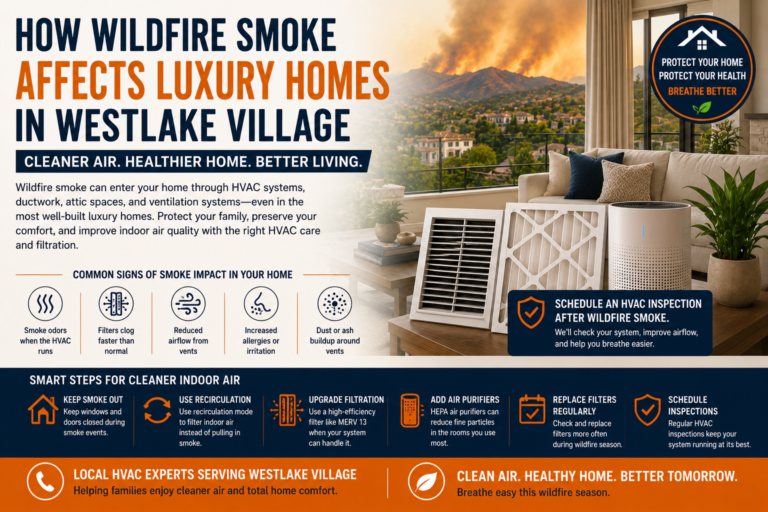
Quick Answer Wildfire smoke can affect indoor air quality inside Westlake Village homes by entering HVAC systems, ductwork, attic spaces, and ventilation systems. Even luxury homes with modern HVAC systems may experience smoke odors, airborne particles, and filtration problems during wildfire season. Professional HVAC inspections, air purification, filter replacement, and airflow evaluations can help improve […]
Read Article →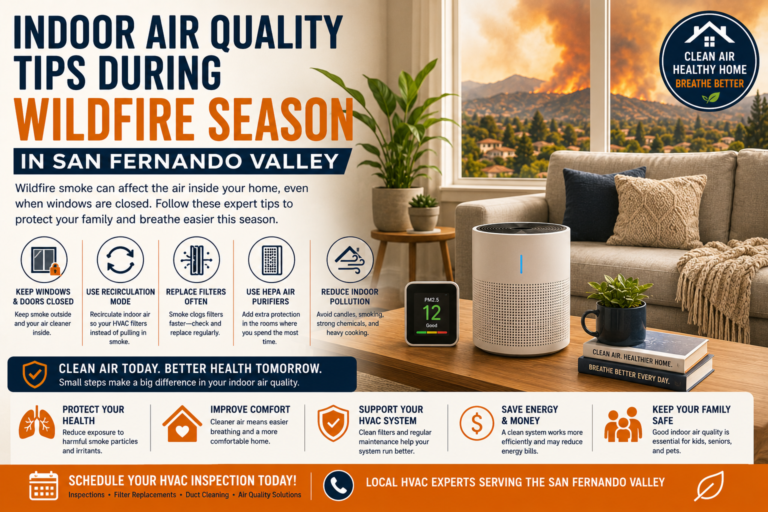
Quick Answer During wildfire season, San Fernando Valley homeowners can improve indoor air quality by keeping windows closed, using HVAC recirculation mode, replacing dirty filters, limiting outdoor air intake, and using properly sized HEPA air purifiers. If smoke odors continue or airflow weakens, schedule an HVAC inspection to check filters, ducts, vents, and indoor air […]
Read Article →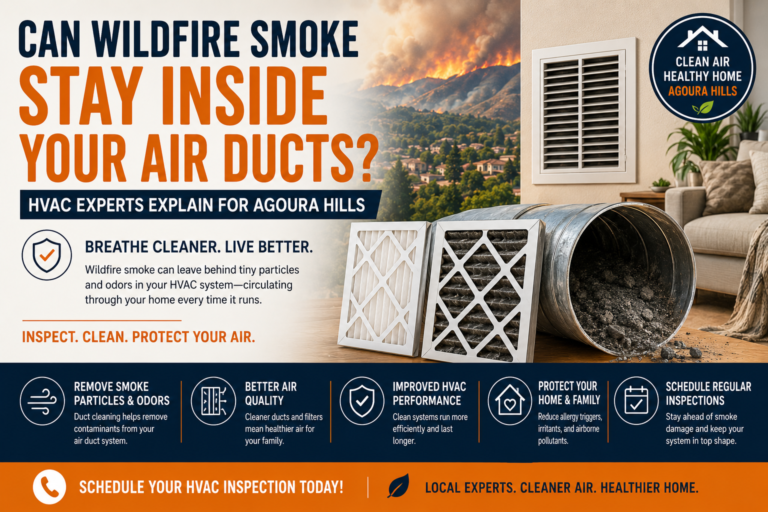
Quick Answer Yes, wildfire smoke particles and odors can remain inside air ducts if smoke residue, ash, dust, or contaminated debris settles within the HVAC system. Not every home needs duct cleaning after wildfire smoke, but Agoura Hills homeowners should schedule an HVAC inspection if smoke odors come from vents, filters clog quickly, airflow weakens, […]
Read Article →Winnetka businesses and property managers can use this directory to find licensed commercial HVAC contractors familiar with the San Fernando Valley's demanding summer conditions and the neighborhood's older commercial building stock. Request service to get matched with available local providers.