Supreme Mechanical provides expert HVAC installation, repair, and maintenance services for homes and businesses.
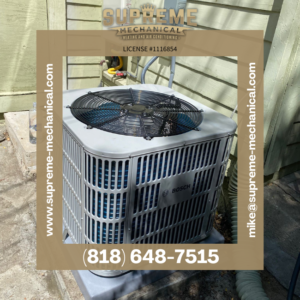



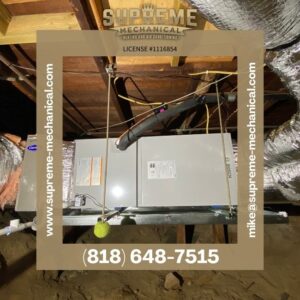

Keep your cooling system ready for the San Fernando Valley heat
Canoga Park summers push temperatures well into the 90s and beyond in the western San Fernando Valley, putting serious demand on residential AC systems year after year. Routine AC maintenance helps homeowners and renters in this densely populated, working-class neighborhood avoid mid-summer breakdowns and keep energy bills manageable. Local HVAC technicians can inspect, clean, and tune up your system before the heat peaks — or anytime performance starts to slip.
AC maintenance is a scheduled service in which a qualified HVAC technician inspects, cleans, and tests a central air conditioning system to ensure it operates efficiently and reliably. In Canoga Park, where many homes along the Sherman Way and Topanga Canyon corridors were built decades ago, aging ductwork and older equipment make preventive maintenance especially important. At roughly 1,100 feet of elevation, the neighborhood sits inland where summer heat is amplified compared to coastal Los Angeles, meaning AC systems run longer and harder each season. A typical tune-up includes coil cleaning, refrigerant level checks, filter replacement, electrical connection inspection, and thermostat calibration. Catching small issues early — a worn capacitor, a dirty condenser coil, restricted airflow — prevents the costly emergency repairs that tend to hit at the worst possible time.
Canoga Park is a compact, high-density neighborhood — just under five square miles with more than 54,000 residents — where most households depend entirely on central AC to get through summer. Unlike coastal communities to the south and west, Canoga Park receives little marine influence, and inland San Fernando Valley heat events can send temperatures soaring well above 100°F. For the working-class families and renters who make up a large share of the community, an unexpected AC failure isn’t just uncomfortable — it’s a financial disruption. Preventive maintenance is the most cost-effective way to avoid that scenario.
The best window for AC maintenance in Canoga Park is late February through April — before the Valley heat arrives and before HVAC schedules fill up. A spring tune-up gives technicians time to order any parts needed and ensures the system is fully tested before it’s running daily. That said, a late-season maintenance visit is still worthwhile if summer has already started; even a partially optimized system performs better and costs less to run than a neglected one.
Many properties in Canoga Park — particularly in the older residential blocks between the Canoga Park Recreation Center area and the commercial corridors — have original or aging HVAC equipment. Older systems benefit most from annual maintenance, as wear accumulates faster and efficiency losses are greater. Canoga Park residents can use this directory to find local HVAC pros familiar with the neighborhood’s housing mix, from post-war single-family homes to multi-unit apartment buildings on denser blocks.
Understanding when to call an expert can save you time, money and prevent bigger problems down the line.
There are several clear signals that it’s time to book a maintenance visit for your Canoga Park home or unit:
Annual maintenance is the industry standard recommendation, and many local HVAC professionals offer service agreements that lock in a seasonal visit at a set rate — a practical option for Canoga Park households looking to manage home expenses predictably.
Supreme Mechanical provides expert HVAC installation, repair, and maintenance services for homes and businesses.
Signs You Need This Service
Weak or Uneven Airflow
If some rooms in your Canoga Park home feel significantly warmer than others, restricted airflow from dirty filters or blocked ducts is a likely cause. A maintenance visit will identify and clear the obstruction.
Higher-Than-Usual Electric Bills
A sudden increase in summer electricity costs often means the AC is working harder than it should to maintain temperature. Dirty coils or low refrigerant are common culprits addressed during a tune-up.
Unusual Noises During Operation
Rattling, grinding, or squealing sounds can signal loose components, worn fan bearings, or debris in the unit. These issues are safer and cheaper to address during routine maintenance than after a breakdown.
The System Hasn't Been Serviced in Over a Year
In Canoga Park's dry, dusty inland climate, AC systems accumulate particulate buildup faster than in coastal areas. A year between service visits is the recommended maximum for most residential systems.
Thermostat Reads One Temperature but Feels Like Another
When the actual room temperature doesn't match what the thermostat is set to, calibration or refrigerant issues may be to blame — both caught during a standard maintenance inspection.
Older AC units — common in Canoga Park's established residential blocks — often require more thorough cleaning and part inspection, which can add time and labor to a maintenance visit.
Larger central systems serving multi-bedroom homes or multi-unit buildings take longer to service than compact single-zone setups, affecting the overall cost of the visit.
If the system is low on refrigerant, topping it off adds to the cost of a standard tune-up since refrigerant is priced separately from labor.
Maintenance visits that include replacing worn capacitors, filters, or belts will cost more than a clean-only inspection, though catching these parts early is still far less expensive than emergency replacements.
Many Canoga Park HVAC providers offer annual maintenance plans at a lower per-visit rate than one-time bookings, making them cost-effective for homeowners who want consistent service.
Book a maintenance appointment in late winter or early spring to secure a preferred time slot before Valley heat arrives and local HVAC calendars fill up.
The technician performs a full visual and operational inspection of the AC unit, checking electrical connections, refrigerant lines, coils, and ductwork access points.
Evaporator and condenser coils are cleaned, the condensate drain is cleared, and the area around the outdoor unit is checked for debris — a common issue in Canoga Park's dusty inland environment.
The technician runs the system through a full cycle, measures airflow and temperature differentials, checks refrigerant pressure, and calibrates the thermostat for accurate temperature control.
At the end of the visit, the technician provides a summary of the system's condition and flags any components approaching failure so the homeowner can plan ahead rather than face a surprise repair.
This site is a directory of local service providers. Pricing, processes, timelines, and recommendations vary by company. Always confirm details directly with your chosen provider before proceeding.
Wildfire smoke can significantly reduce indoor air quality, even when windows and doors are closed. Fine smoke particles can enter through small gaps, ventilation pathways, and HVAC systems without proper filtration. These particles may trigger allergies, breathing discomfort, headaches, and irritation. Homes in Southern California are especially vulnerable during fire season. Better filtration and air quality upgrades can help reduce indoor smoke exposure.
Yes, air purifiers can help improve indoor air quality when they are properly matched to the home and used alongside a maintained HVAC system. They are especially useful for reducing airborne particles such as dust, smoke, allergens, and some odors. Whole-home systems can treat air throughout the property, while portable units are more limited to specific rooms. Air purifiers work best as part of a larger strategy that includes filtration, ventilation, and regular HVAC maintenance. They are not a complete substitute for fixing underlying air quality issues.
Yes, HVAC systems can play a major role in improving indoor air quality when they are properly maintained and equipped. They help circulate air, remove airborne particles through filtration, and support balanced comfort throughout the home. Upgrades such as higher-efficiency filters, air purifiers, and duct improvements can make a noticeable difference. Routine maintenance is also important because a neglected system can spread dust and contaminants instead of reducing them. For many Southern California homes, HVAC performance is directly tied to air quality.
HVAC service costs vary widely depending on the job. Basic maintenance may cost $100–$250, repairs range from $150–$1,500+, and full system replacements can range from $5,000–$15,000+ depending on size and efficiency.
HVAC filters should typically be checked monthly and changed every one to three months, depending on the filter type, household conditions, and air quality concerns. Homes with pets, allergies, high dust levels, or wildfire smoke exposure may need more frequent filter changes. A clean filter helps your HVAC system capture more airborne particles and maintain better airflow. Waiting too long can reduce both air quality and system efficiency. Regular filter changes are one of the simplest ways to support healthier indoor air.
Indoor air quality in Southern California homes is shaped by both outdoor and indoor conditions. Wildfire smoke, freeway pollution, dust, and seasonal allergens can enter the home, while indoor sources like pets, cleaning products, cooking, and older ductwork can add to the problem. HVAC systems, filtration, and ventilation all play a major role in how clean and healthy the air feels indoors. A home with poor airflow or outdated filters will usually experience more noticeable air quality issues. Taking a proactive approach can make a major difference in comfort and health.
Common indoor air pollutants in Southern California include dust, pet dander, pollen, mold spores, smoke particles, and chemical residues from cleaning products or building materials. Outdoor pollution can also enter the home, especially near freeways or during wildfire season. These pollutants can build up when airflow is poor or filters are not changed regularly. HVAC systems with proper filtration help reduce their impact. Identifying the source is the first step toward improving air quality.
Information provided here is for general guidance only and does not constitute professional advice. Local Service Biz is an independent directory that connects users with third-party providers and does not perform services or guarantee results. Costs, timelines, and recommendations vary by location, property conditions, and provider practices. Users should independently verify licensing, insurance, and service details before hiring any provider.
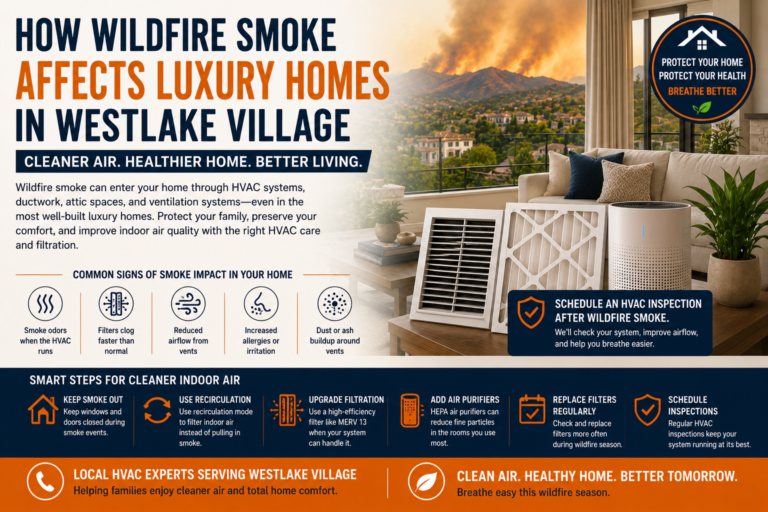
Quick Answer Wildfire smoke can affect indoor air quality inside Westlake Village homes by entering HVAC systems, ductwork, attic spaces, and ventilation systems. Even luxury homes with modern HVAC systems may experience smoke odors, airborne particles, and filtration problems during wildfire season. Professional HVAC inspections, air purification, filter replacement, and airflow evaluations can help improve […]
Read Article →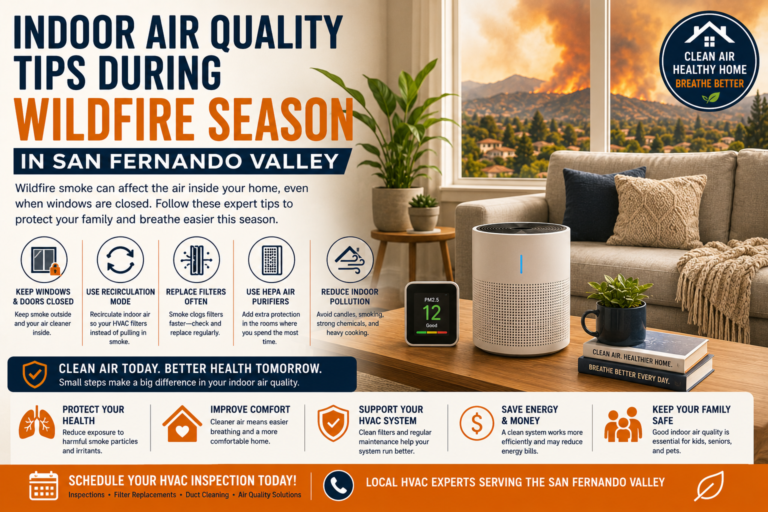
Quick Answer During wildfire season, San Fernando Valley homeowners can improve indoor air quality by keeping windows closed, using HVAC recirculation mode, replacing dirty filters, limiting outdoor air intake, and using properly sized HEPA air purifiers. If smoke odors continue or airflow weakens, schedule an HVAC inspection to check filters, ducts, vents, and indoor air […]
Read Article →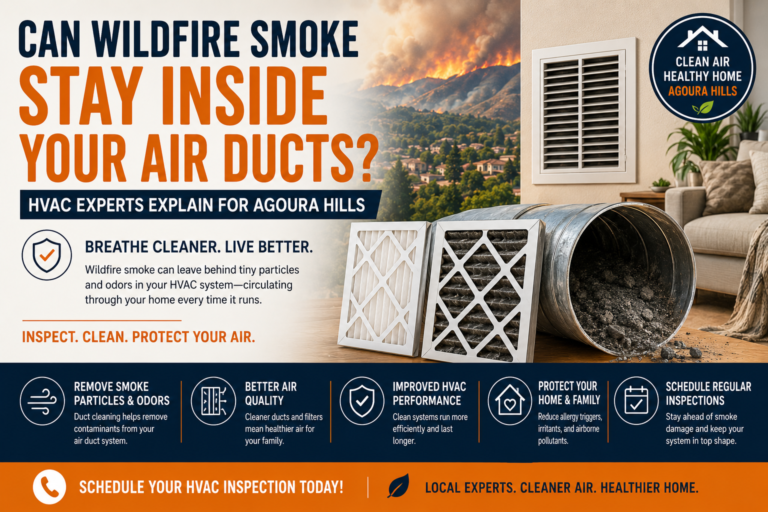
Quick Answer Yes, wildfire smoke particles and odors can remain inside air ducts if smoke residue, ash, dust, or contaminated debris settles within the HVAC system. Not every home needs duct cleaning after wildfire smoke, but Agoura Hills homeowners should schedule an HVAC inspection if smoke odors come from vents, filters clog quickly, airflow weakens, […]
Read Article →Connect with local HVAC technicians who know the western San Fernando Valley's climate and housing stock — and can get your system tuned up before summer peaks.