Hovee’s Auto Body & Paint helps drivers restore their vehicles after accidents, dents, and collision damage with professional auto body repair and painting services.



Local answers on dent removal for Simi Valley drivers
Dent repair restores a vehicle's body panels to their original shape after impacts, hail, or parking lot incidents — without a full repaint in many cases. Simi Valley drivers have several local auto body options for everything from minor door dings to more significant creases. Understanding what the repair process involves helps you ask the right questions and get a fair outcome.
Dent repair in Simi Valley covers a range of techniques matched to the size, depth, and location of damage on a vehicle. The city's suburban layout — with large shopping centers along Tapo Canyon Road, the Sycamore Drive corridor, and busy parking areas near the Ronald Reagan Presidential Library — creates frequent low-speed parking lot contact that results in minor dings. Paintless dent repair (PDR) is commonly recommended for shallow dents where the paint is intact, while deeper creases or damage near panel edges typically require filler and refinishing. Simi Valley's Mediterranean-adjacent climate means hail events are uncommon but not unheard of during winter storm systems that push through the Santa Susana Mountains, occasionally causing multi-panel hail damage. With a median household income near $95,800 and a population that skews toward families with newer vehicles, many residents here weigh repair costs carefully against insurance deductibles.
Dent repair is a broad category within the auto body industry. Depending on the damage, a provider may use paintless dent repair (PDR), conventional body filler methods, or a combination of both. The right approach depends on dent size, panel location, and whether the factory paint was broken.
PDR is the preferred method for small to medium dents where the paint surface is unbroken. A technician uses specialized rods and picks to massage the metal back into shape from behind the panel. This approach preserves the factory finish, typically costs less, and turns around faster — often same-day. It’s well-suited to the types of door dings common in Simi Valley’s retail parking areas around the Simi Valley Town Center and along Los Angeles Avenue.
When a dent is deep, located on a panel edge, or accompanied by cracked paint, body filler and repainting are usually required. This is a more involved process: the panel is reshaped, filler is applied and sanded, and the surface is primed and painted to match the existing color. Paint matching technology has advanced considerably, but some variation is possible on older vehicles or factory colors with metallic flake.
Winter storm systems that track through the Santa Susana Pass occasionally bring hail to the Simi Valley floor. Multi-panel hail damage typically requires a full PDR assessment across the roof, hood, and trunk lid. Shops that specialize in storm damage can work directly with insurance adjusters to document and scope the repair correctly.
Simi Valley’s suburban character means a high proportion of SUVs, trucks, and family vehicles on the road — vehicle types with larger body panels that respond well to PDR when damage is caught early. Learn more about local services available throughout Simi Valley to find providers suited to your specific vehicle and damage type.
Understanding when to call an expert can save you time, money and prevent bigger problems down the line.
Most dents don’t happen on the open road — they happen in parking lots, driveways, and tight residential streets. The high-volume retail corridors in Simi Valley, including the Town Center off Erringer Road and the shopping plazas along Cochran Street, are frequent sources of door dings and low-speed bumper contact.
Even small dents can affect a vehicle’s resale value or allow moisture to work into the paint layer over time, particularly relevant for vehicles parked outdoors year-round in Southern California’s UV-intense environment. Addressing damage promptly through a qualified auto body provider typically results in better outcomes and lower costs than waiting.
Hovee’s Auto Body & Paint helps drivers restore their vehicles after accidents, dents, and collision damage with professional auto body repair and painting services.
Signs You Need This Service
Visible Panel Depression
A clear inward dent or crease on a door, fender, hood, or trunk lid is the most obvious indicator that repair is needed. Even shallow depressions can distort light reflection and stand out on a clean vehicle.
Paint Cracking or Chipping at the Dent Site
When the impact was hard enough to crack the factory paint, the underlying metal is exposed to moisture and oxidation. This situation calls for conventional repair rather than PDR.
Multiple Small Dimples Across Horizontal Panels
A pattern of small, evenly distributed dimples on the roof, hood, or trunk is characteristic of hail damage and typically requires a comprehensive PDR assessment across all affected panels.
Misaligned Panel Gaps
If a dent is severe enough to shift how a door or panel sits relative to adjacent body parts, the underlying structure may need attention before cosmetic repair begins.
Pre-Sale Vehicle Condition
Owners preparing a vehicle for private sale or trade-in often address accumulated minor dents to improve presentation and support a stronger asking price.
Larger and deeper dents require more labor time and may exceed the scope of PDR, requiring filler and refinishing. Technicians typically assess size in diameter and depth before quoting.
Dents near panel edges, character lines, or structural creases are harder to work behind and may not be suitable for PDR regardless of size. Flat, open panel sections are generally easier to access.
If the factory paint is intact, PDR preserves it at no additional cost. Cracked or chipped paint requires primer, color-matching, and clearcoat, all of which add to the total repair cost.
Hail damage or a multi-panel collision repair involves assessing and correcting each panel separately. More panels affected means more labor hours and potentially more paint work.
Aluminum panels, common on newer trucks and SUVs, require different PDR tooling and expertise than steel panels, which can affect both cost and technician availability.
Whether a repair goes through an insurance claim or is paid directly affects what documentation and supplemental estimates may be required, influencing the shop's administrative workload.
A technician examines the dent under directional lighting to determine size, depth, location relative to panel edges, and whether the paint is intact. This assessment determines which repair method is appropriate.
Based on the assessment, the shop recommends either PDR, conventional body repair, or a combination. A written estimate outlines the scope, method, and expected turnaround time.
For PDR, interior trim or lighting components may need to be temporarily removed to allow tool access behind the panel. For conventional repair, the area around the dent is sanded and prepped.
In PDR, the technician uses specialized rods to gradually push the metal back to its original contour, monitoring progress with a reflection board. Conventional repair involves applying and shaping body filler after reshaping the metal.
When paint has been damaged or filler applied, the area is primed, color-matched using the vehicle's paint code, sprayed, and clearcoated. The panel is then polished to blend with the surrounding finish.
The completed repair is inspected under lighting to confirm the panel contour and finish meet quality standards before the vehicle is returned to the owner.
This site is a directory of local service providers. Pricing, processes, timelines, and recommendations vary by company. Always confirm details directly with your chosen provider before proceeding.
Professional paint matching helps restore your vehicle’s appearance and protects long-term resale value after an accident. Modern paint systems are highly complex, especially with metallic and pearl finishes. Accurate paint blending and refinishing help ensure repaired panels match the surrounding factory finish properly.
Drivers should look for collision repair shops with strong reviews, experienced technicians, advanced repair equipment, insurance claim assistance, structural repair capabilities, and clear communication. Modern vehicles require specialized repair procedures and safety system calibrations, making professional experience extremely important after an accident.
Yes. California drivers generally have the legal right to choose their own collision repair shop after an accident. Insurance companies may recommend preferred repair facilities, but vehicle owners can select the shop they trust for repairs. Choosing an experienced collision repair facility helps ensure proper structural repairs, paint matching, and safety system calibration after an accident.
Collision repair estimates can vary because each shop may inspect damage differently, use different labor rates, recommend different repair methods, or identify different levels of hidden damage. Parts selection, paint materials, structural repair needs, and insurance requirements can also affect pricing. A lower estimate is not always better if it leaves out important repairs or safety-related work.
Yes. Even low-speed accidents can create hidden damage underneath visible body panels. Modern vehicles contain structural supports, sensors, brackets, and safety systems that may be affected during a collision. Professional inspections help identify hidden damage before it leads to larger safety or drivability issues later.
A collision repair estimate usually includes visible damage inspection, labor, replacement parts, paint materials, refinishing work, structural repairs, and sometimes diagnostic scans or safety system calibration. The first estimate may not include hidden damage because some issues are only discovered after vehicle disassembly. Supplemental estimates may be needed later.
Collision repair timelines may change because hidden damage is often discovered after technicians disassemble the vehicle. Insurance approvals, parts availability, paint curing time, structural repairs, and safety system calibrations can also affect the repair schedule. Modern vehicles require more detailed repair procedures than older cars due to advanced technology and safety systems.
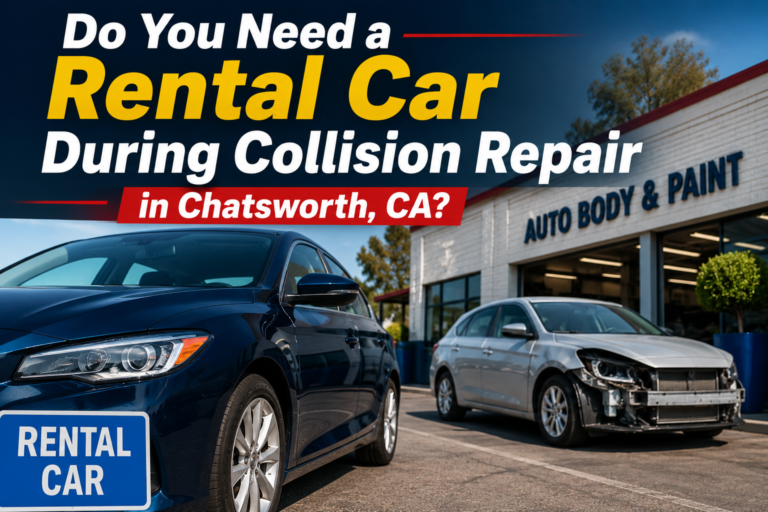
After an accident, many drivers focus immediately on the visible damage to their vehicle. But once repairs begin, another major question quickly comes up: “How am I going to get around while my car is in the shop?” For drivers researching collision repair in Chatsworth, understanding how rental cars work during the repair process can […]
Read Article →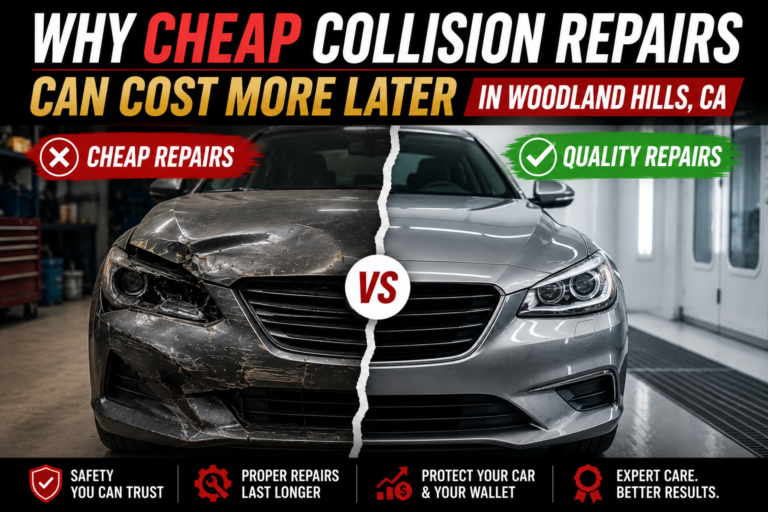
After an accident, many drivers immediately start comparing repair estimates. That is understandable. Collision repairs can feel unexpected and stressful, especially when dealing with insurance claims, rental vehicles, and daily transportation needs. However, choosing the cheapest repair option is not always the smartest long-term decision. For drivers researching collision repair in Woodland Hills, understanding the […]
Read Article →
After a vehicle is repaired following an accident, many drivers assume the process is complete the moment they pick up their keys. However, one of the most important steps in modern collision repair actually happens at the very end: the post-repair inspection. For drivers researching collision repair in Canoga Park, understanding the importance of post-repair […]
Read Article →Browse local auto body shops familiar with Simi Valley neighborhoods, vehicle types, and the repair scenarios common to this part of Ventura County. Connect with a qualified provider to get an accurate assessment for your specific damage.