Hovee’s Auto Body & Paint helps drivers restore their vehicles after accidents, dents, and collision damage with professional auto body repair and painting services.

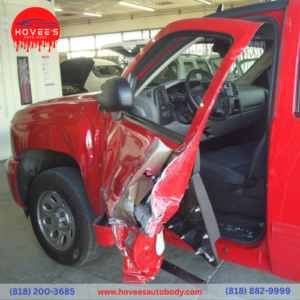


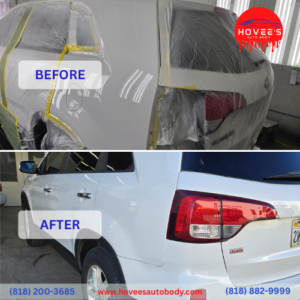
Collision, dent, and paint repair for Chatsworth drivers navigating the northwest Valley
Chatsworth drivers deal with winding canyon roads, high-speed freeway approaches on the 118, and rock-formation terrain that can turn a minor misjudgment into real body damage. Auto body repair shops in the area handle everything from fender benders and paint scratches to frame straightening after more serious collisions. Whether the damage happened on Santa Susana Pass Road or in a crowded parking lot near Topanga Canyon Boulevard, local body shops can restore your vehicle and work directly with your insurance provider.
Auto body repair covers the diagnosis and restoration of a vehicle's exterior structure, panels, paint, and frame after collision, weather exposure, or road damage. In Chatsworth — a neighborhood sitting at roughly 1,250 feet elevation in the northwestern San Fernando Valley — vehicles are regularly exposed to dry Santa Ana wind conditions that accelerate paint oxidation, as well as unpaved equestrian and trail-adjacent roads that contribute to undercarriage and lower-panel wear. The area's mix of older ranch-style properties and newer residential developments means the vehicle stock ranges from daily commuter sedans to trucks, SUVs, and horse trailers, each presenting distinct repair considerations. Shops serving this community are accustomed to handling both standard passenger vehicles and the heavier-duty rigs common to an active equestrian neighborhood.
Chatsworth occupies a unique corner of Los Angeles’s northwest San Fernando Valley, bordered by rocky terrain, state historic parkland, and a network of roads that include everything from wide suburban streets to narrow canyon passes. That geography directly shapes the kinds of auto body work local shops handle most often.
The 118 (Ronald Reagan) Freeway cuts directly through Chatsworth, and its interchange areas are a consistent source of fender-bender and rear-end collision claims. Santa Susana Pass State Historic Park draws weekend traffic onto roads that weren’t designed for high volumes, adding to the local body shop workload. Residents near Stoney Point and the equestrian corridors also tend to drive larger vehicles — full-size pickups, horse trailers, and vans — that require shops with the equipment and experience for heavier repair jobs.
Look for shops that offer written estimates, use OEM or manufacturer-approved parts, and have clear timelines for completion. Given Chatsworth’s distance from the denser body-shop clusters in central Van Nuys or Canoga Park, finding a locally trusted shop can also save meaningful time on drop-off and pickup logistics.
Understanding when to call an expert can save you time, money and prevent bigger problems down the line.
Not every situation requires immediate action, but certain types of damage should be assessed by a professional sooner rather than later. Structural damage that goes unrepaired can compromise safety systems, and exposed metal or paint chips in Chatsworth’s dry, sun-intense climate will rust or oxidize faster than in coastal communities.
Common situations that bring Chatsworth residents to a body shop include:
If you’re unsure whether your damage qualifies as a body repair or a mechanical issue, an estimate from a qualified shop clarifies the scope quickly. Learn more about what the auto body repair industry covers before your first appointment so you arrive informed.
Hovee’s Auto Body & Paint helps drivers restore their vehicles after accidents, dents, and collision damage with professional auto body repair and painting services.
Signs You Need This Service
Visible Panel Damage or Crumpling
Dents, creases, or collapsed panels after a collision indicate structural work is needed, not just cosmetic touch-up. Even minor crumpling on a bumper cover can hide damage to the underlying support structure.
Paint Chips, Scratches, or Rust Spots
Exposed metal from a scratch or chip oxidizes quickly under Chatsworth's intense sun and dry Santa Ana conditions. Addressing it early prevents rust from spreading beneath the surrounding paint.
Misaligned Doors, Hood, or Trunk
Panel gaps that weren't there before a collision often signal frame or unibody movement that needs professional measurement and correction. A door that doesn't close flush is a safety concern, not just an aesthetic one.
Cracked or Shattered Glass Integrated with Body Panels
Rear windshields and quarter glass that crack due to impact often involve the surrounding body panel as well. A body shop can assess whether the surrounding structure needs repair alongside the glass replacement.
Paint Fading or Oxidation Across a Full Panel
Vehicles parked outdoors in Chatsworth's high-elevation, low-humidity climate experience accelerated UV degradation. When a single panel fades noticeably more than others, full refinishing restores uniformity and protects the metal underneath.
Surface dents and scratches cost significantly less to address than repairs involving frame straightening or unibody realignment. Shops use computerized measuring systems to determine whether structural work is required.
Full-size pickups, SUVs, and the horse trailers common in Chatsworth's equestrian community require more materials and labor than compact sedans. Panel size and part availability for larger vehicles both affect the final estimate.
Metallic, pearl, and multi-stage paint finishes require more precise mixing and additional application steps than single-stage solid colors. Vehicles with significant UV fading may also need blending on adjacent panels for a seamless result.
Original equipment manufacturer parts typically carry a higher price than aftermarket alternatives but are often required by manufacturer warranties or preferred by insurers. Your shop and insurer can clarify which parts apply to your repair.
Comprehensive and collision coverage typically offset most repair costs beyond your deductible, but the specifics depend on your policy and the circumstances of the damage. Shops that work directly with insurers can help navigate the claims process.
A technician inspects the vehicle in person, documenting visible and hidden damage before producing a written estimate. In Chatsworth, many shops offer drop-off estimates without an appointment to accommodate residents commuting on the 118 corridor.
If an insurance claim is involved, the shop communicates with the adjuster, submits documentation, and confirms coverage before work begins. This step prevents surprises on the final bill and keeps the repair timeline clear.
Damaged panels and components are removed to expose the underlying structure for frame measurement and straightening if needed. This stage determines the full scope of work and may surface additional damage not visible during the initial estimate.
Technicians reshape, fill, and sand affected panels to restore the original contour before any paint is applied. Precision at this stage is what separates a repair that holds up over time from one that shows imperfections within a season.
Computerized color-matching systems blend the correct formula for the vehicle's specific factory color, accounting for any UV fading on surrounding panels. Multiple coats are applied, cured, and clear-coated to match factory gloss and durability.
All removed components are reinstalled and the vehicle undergoes a final inspection for fit, finish, and function before the customer is contacted for pickup. Reputable shops walk owners through the completed work before handing back the keys.
This site is a directory of local service providers. Pricing, processes, timelines, and recommendations vary by company. Always confirm details directly with your chosen provider before proceeding.
Collision repair timelines may change because hidden damage is often discovered after technicians disassemble the vehicle. Insurance approvals, parts availability, paint curing time, structural repairs, and safety system calibrations can also affect the repair schedule. Modern vehicles require more detailed repair procedures than older cars due to advanced technology and safety systems.
A collision repair estimate usually includes visible damage inspection, labor, replacement parts, paint materials, refinishing work, structural repairs, and sometimes diagnostic scans or safety system calibration. The first estimate may not include hidden damage because some issues are only discovered after vehicle disassembly. Supplemental estimates may be needed later.
Yes. Even low-speed accidents can create hidden damage underneath visible body panels. Modern vehicles contain structural supports, sensors, brackets, and safety systems that may be affected during a collision. Professional inspections help identify hidden damage before it leads to larger safety or drivability issues later.
Collision repair estimates can vary because each shop may inspect damage differently, use different labor rates, recommend different repair methods, or identify different levels of hidden damage. Parts selection, paint materials, structural repair needs, and insurance requirements can also affect pricing. A lower estimate is not always better if it leaves out important repairs or safety-related work.
Drivers should look for collision repair shops with strong reviews, experienced technicians, advanced repair equipment, insurance claim assistance, structural repair capabilities, and clear communication. Modern vehicles require specialized repair procedures and safety system calibrations, making professional experience extremely important after an accident.
Yes. California drivers generally have the legal right to choose their own collision repair shop after an accident. Insurance companies may recommend preferred repair facilities, but vehicle owners can select the shop they trust for repairs. Choosing an experienced collision repair facility helps ensure proper structural repairs, paint matching, and safety system calibration after an accident.
Professional paint matching helps restore your vehicle’s appearance and protects long-term resale value after an accident. Modern paint systems are highly complex, especially with metallic and pearl finishes. Accurate paint blending and refinishing help ensure repaired panels match the surrounding factory finish properly.
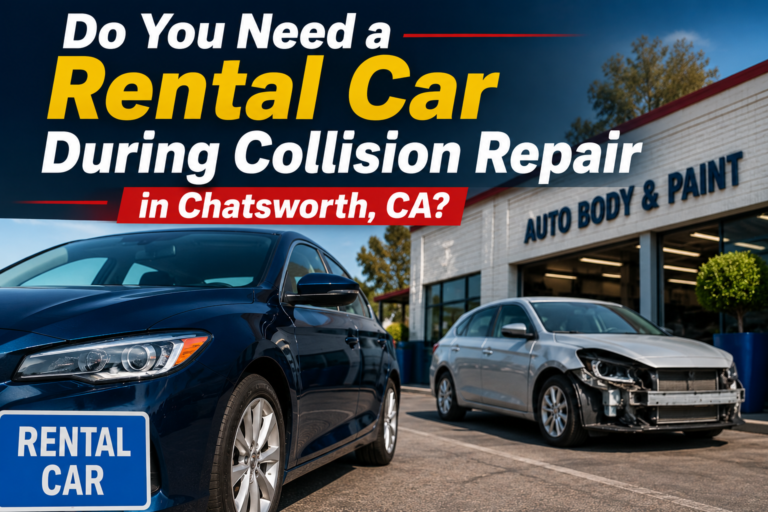
After an accident, many drivers focus immediately on the visible damage to their vehicle. But once repairs begin, another major question quickly comes up: “How am I going to get around while my car is in the shop?” For drivers researching collision repair in Chatsworth, understanding how rental cars work during the repair process can […]
Read Article →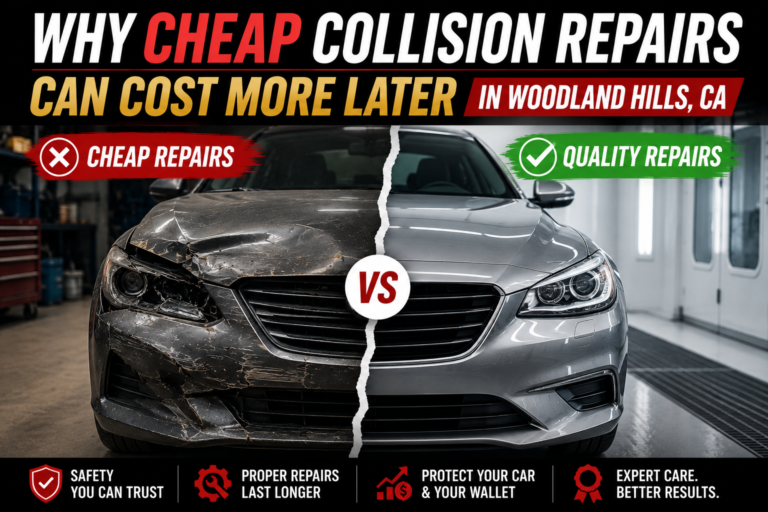
After an accident, many drivers immediately start comparing repair estimates. That is understandable. Collision repairs can feel unexpected and stressful, especially when dealing with insurance claims, rental vehicles, and daily transportation needs. However, choosing the cheapest repair option is not always the smartest long-term decision. For drivers researching collision repair in Woodland Hills, understanding the […]
Read Article →
After a vehicle is repaired following an accident, many drivers assume the process is complete the moment they pick up their keys. However, one of the most important steps in modern collision repair actually happens at the very end: the post-repair inspection. For drivers researching collision repair in Canoga Park, understanding the importance of post-repair […]
Read Article →Whether the damage happened on the 118, along Santa Susana Pass Road, or in a neighborhood parking lot, Chatsworth-area auto body shops can assess the work and connect you with qualified local providers who know the area.