Hovee’s Auto Body & Paint helps drivers restore their vehicles after accidents, dents, and collision damage with professional auto body repair and painting services.
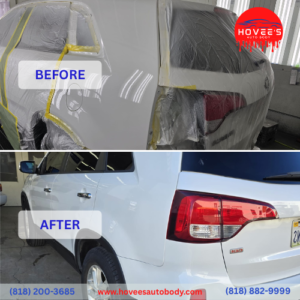
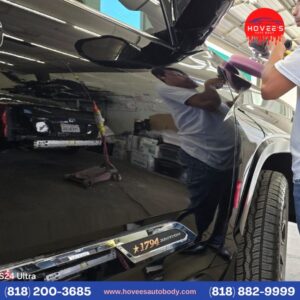
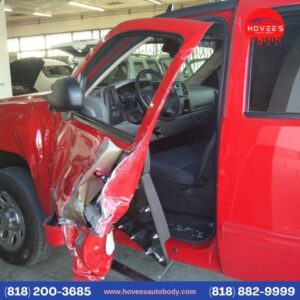
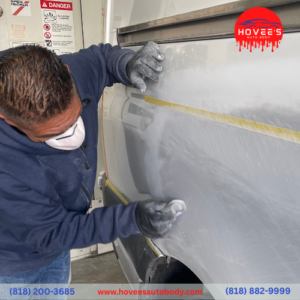
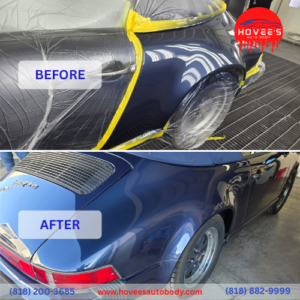
Matching, refinishing, and restoring vehicle paint in the western San Fernando Valley
Winnetka drivers navigating the dense surface streets of the western San Fernando Valley — from Roscoe Boulevard to DeSoto Avenue — deal with their share of door dings, scrapes, and sun-faded clearcoat. Local auto paint and refinishing shops can restore a vehicle's finish to factory condition or correct years of UV damage from Southern California's intense sun at 1,001 feet of elevation. Finding a qualified provider with verifiable workmanship standards is the key step before any paint work begins.
Auto paint and refinishing covers a range of services from spot repairs on a single panel to complete vehicle repaints, including color matching, clearcoat application, and paint restoration on oxidized surfaces. In Winnetka, a densely packed neighborhood at over 13,000 residents per square mile, vehicles parked on tight residential streets are especially prone to minor collision scuffs and parking-lot contact damage. The San Fernando Valley's dry summers and strong UV index accelerate paint oxidation on older vehicles — many of which are daily commuters making the 22-mile run to Downtown LA. A skilled refinishing technician uses computerized color-matching technology to blend new paint seamlessly with existing panels, and quality shops back their work with a written warranty.
Auto paint and refinishing services address everything from a single scratched quarter panel to a full vehicle color change. For Winnetka residents, the most common needs fall into a few clear categories driven by the neighborhood’s character and climate.
Southern California’s sun is relentless, and at Winnetka’s elevation in the San Fernando Valley, UV exposure is a consistent problem for vehicle owners. Clearcoat oxidation — that chalky, faded look on hoods and roofs — is one of the most frequent reasons locals seek paint restoration. A proper refinishing job removes the damaged layer, corrects the surface, and applies a new clearcoat that extends the paint’s life significantly.
Winnetka’s residential streets are narrow and heavily parked. The area’s population density means tight maneuvering near driveways on streets like Shoup Avenue and Winnetka Avenue, and parking-lot scrapes are a routine reality. Paint repair following minor contact damage typically involves panel preparation, color-matched basecoat application, and clearcoat blending to make the repair invisible.
Older vehicles in Winnetka’s working-family households often reach a point where piecemeal panel repairs no longer make sense. A full body repaint restores uniform color and protection across the entire vehicle, which can meaningfully extend a car’s useful life — an important consideration when replacement costs are high.
Modern paint matching uses spectrophotometers and manufacturer paint codes to achieve results that are visually indistinguishable from the factory finish. Reputable shops will blend adjacent panels to account for any variation in the existing paint’s aging.
Winnetka sits within one of Los Angeles’s most vehicle-dependent communities, where a car’s appearance and protection matter for both resale value and daily utility. Explore more local service options on the Winnetka local services page to find vetted providers in your area.
Understanding when to call an expert can save you time, money and prevent bigger problems down the line.
Not every paint issue requires immediate action, but several situations call for professional attention sooner rather than later.
Understanding what type of paint service your vehicle actually needs is the first step. The auto body industry page provides a broader overview of related services, including dent removal, frame repair, and insurance claim support.
Hovee’s Auto Body & Paint helps drivers restore their vehicles after accidents, dents, and collision damage with professional auto body repair and painting services.
Signs You Need This Service
Faded or Chalky Paint
A chalky, dull surface on the hood, roof, or trunk indicates clearcoat failure from prolonged UV exposure — common on vehicles regularly parked outdoors in the San Fernando Valley sun. This stage requires professional restoration before the damage reaches the basecoat.
Visible Scratches or Scuffs
Scratches that cut through the clearcoat or basecoat expose primer or bare metal to moisture and oxidation. Winnetka's tight parking conditions make this a frequent issue that worsens quickly if left untreated.
Peeling or Bubbling Paint
Paint that lifts, bubbles, or peels is usually a sign of adhesion failure or underlying rust beginning to push through. This requires immediate attention to prevent the damage from spreading across the panel.
Mismatched Panel Colors
If a previous repair was done poorly, one panel may look noticeably different from adjacent ones. A qualified shop can blend and match the color correctly using computerized spectrophotometer matching.
Surface Rust Spots
Small rust spots on the body surface signal that paint protection has been fully compromised. Early-stage rust can often be addressed during refinishing, but delays allow corrosion to spread and drive up repair costs.
A single-panel spot repair costs significantly less than a multi-panel or full-vehicle repaint. The depth of the damage — whether it's surface clearcoat, basecoat, primer, or bare metal — also affects the scope of work required.
Solid colors are generally the most straightforward to match and apply. Metallic, pearl, tri-coat, or factory specialty colors require more materials and layering steps, which increases labor and material costs.
Rust treatment, dent repair, or priming that must be done before any paint is applied adds to the total time and cost. Vehicles with underlying body damage require more prep than those with purely cosmetic paint issues.
Larger vehicles — trucks, SUVs, and full-size vans — require more material and longer booth time than compact cars, which directly affects pricing for both partial and full repaints.
Shops with manufacturer certifications, downdraft paint booths, and computerized color-matching systems typically price at a premium, but the quality of the finished result and warranty terms are usually superior.
A technician inspects the affected panels, identifies the depth of damage, and documents the scope of work needed. For insurance-covered repairs, this estimate is submitted to the insurer for approval before work begins.
The panel is sanded, cleaned, and primed as needed. Any rust, adhesion issues, or dents must be addressed at this stage because paint applied over a compromised surface will not hold properly.
The shop uses the vehicle's paint code and, often, a spectrophotometer scan of the existing paint to formulate a precise color match. This step is critical for ensuring a seamless blend with adjacent panels.
Basecoat and clearcoat layers are applied in a controlled environment, typically a dedicated spray booth, to prevent contamination. Adjacent panels may also receive a light clearcoat blend for a uniform appearance.
The finish is cured under heat lamps or in a bake booth and then inspected under lighting that reveals any imperfections. A final polish may be applied before the vehicle is returned to the owner.
This site is a directory of local service providers. Pricing, processes, timelines, and recommendations vary by company. Always confirm details directly with your chosen provider before proceeding.
Professional paint matching helps restore your vehicle’s appearance and protects long-term resale value after an accident. Modern paint systems are highly complex, especially with metallic and pearl finishes. Accurate paint blending and refinishing help ensure repaired panels match the surrounding factory finish properly.
Collision repair estimates can vary because each shop may inspect damage differently, use different labor rates, recommend different repair methods, or identify different levels of hidden damage. Parts selection, paint materials, structural repair needs, and insurance requirements can also affect pricing. A lower estimate is not always better if it leaves out important repairs or safety-related work.
Drivers should look for collision repair shops with strong reviews, experienced technicians, advanced repair equipment, insurance claim assistance, structural repair capabilities, and clear communication. Modern vehicles require specialized repair procedures and safety system calibrations, making professional experience extremely important after an accident.
Yes. California drivers generally have the legal right to choose their own collision repair shop after an accident. Insurance companies may recommend preferred repair facilities, but vehicle owners can select the shop they trust for repairs. Choosing an experienced collision repair facility helps ensure proper structural repairs, paint matching, and safety system calibration after an accident.
Yes. Even low-speed accidents can create hidden damage underneath visible body panels. Modern vehicles contain structural supports, sensors, brackets, and safety systems that may be affected during a collision. Professional inspections help identify hidden damage before it leads to larger safety or drivability issues later.
Collision repair timelines may change because hidden damage is often discovered after technicians disassemble the vehicle. Insurance approvals, parts availability, paint curing time, structural repairs, and safety system calibrations can also affect the repair schedule. Modern vehicles require more detailed repair procedures than older cars due to advanced technology and safety systems.
A collision repair estimate usually includes visible damage inspection, labor, replacement parts, paint materials, refinishing work, structural repairs, and sometimes diagnostic scans or safety system calibration. The first estimate may not include hidden damage because some issues are only discovered after vehicle disassembly. Supplemental estimates may be needed later.
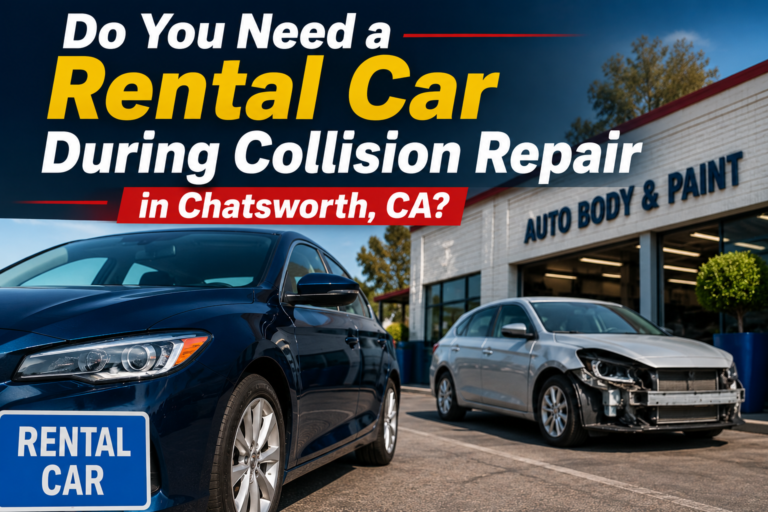
After an accident, many drivers focus immediately on the visible damage to their vehicle. But once repairs begin, another major question quickly comes up: “How am I going to get around while my car is in the shop?” For drivers researching collision repair in Chatsworth, understanding how rental cars work during the repair process can […]
Read Article →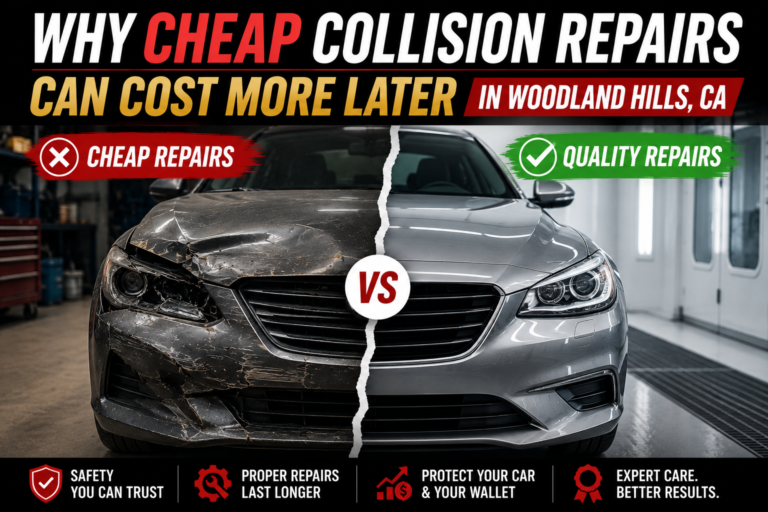
After an accident, many drivers immediately start comparing repair estimates. That is understandable. Collision repairs can feel unexpected and stressful, especially when dealing with insurance claims, rental vehicles, and daily transportation needs. However, choosing the cheapest repair option is not always the smartest long-term decision. For drivers researching collision repair in Woodland Hills, understanding the […]
Read Article →
After a vehicle is repaired following an accident, many drivers assume the process is complete the moment they pick up their keys. However, one of the most important steps in modern collision repair actually happens at the very end: the post-repair inspection. For drivers researching collision repair in Canoga Park, understanding the importance of post-repair […]
Read Article →Whether it's sun-faded clearcoat, a parking-lot scrape, or a full vehicle repaint, Winnetka has qualified auto paint and refinishing shops ready to evaluate your vehicle and provide a written estimate. Use this directory to compare local providers by service, certifications, and location.