
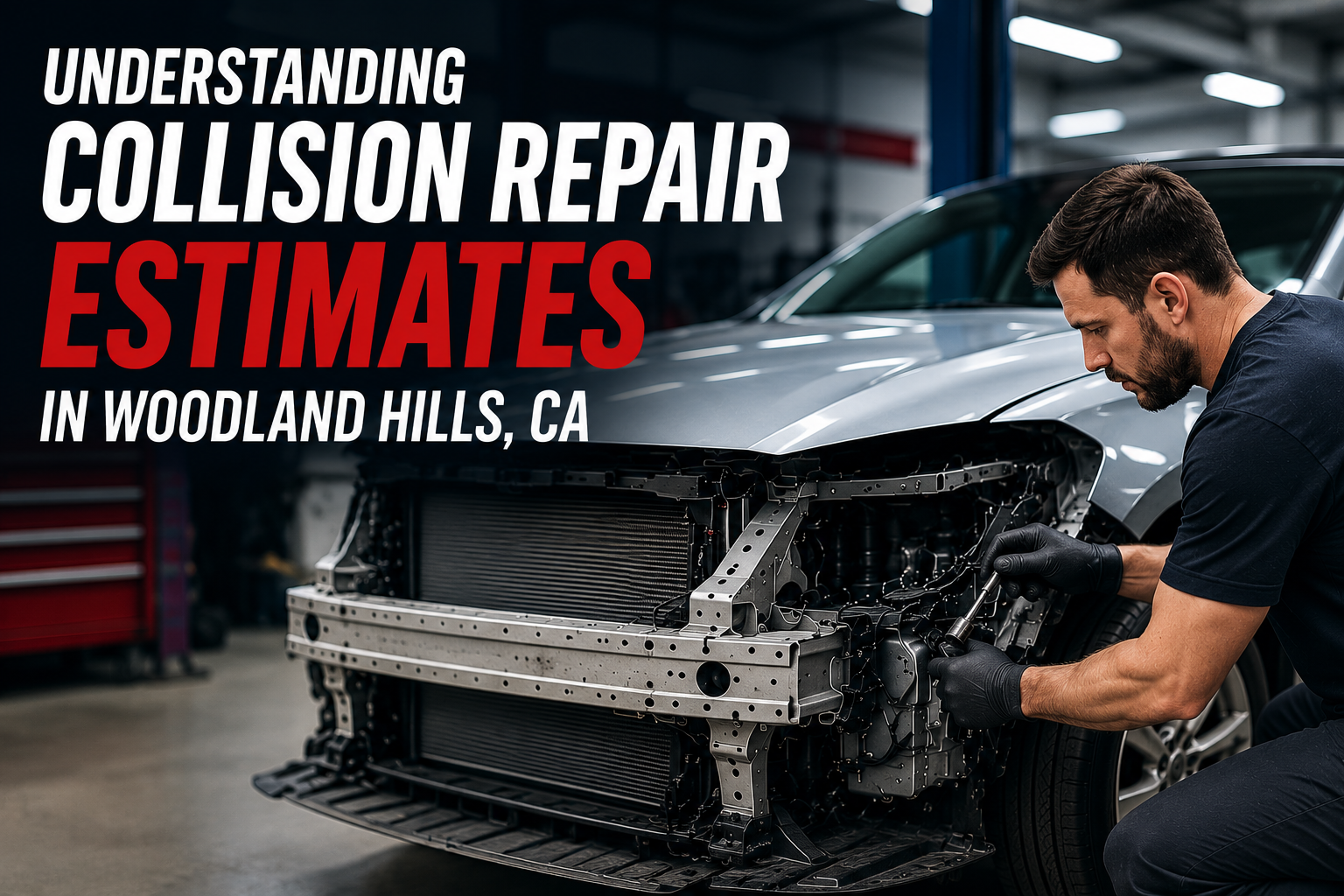



After an accident, the first question many drivers ask is simple: “How much is this going to cost?” The answer is not always simple. Collision repair estimates can vary widely depending on the type of damage, the parts required, paint work, insurance approvals, and whether hidden structural damage is discovered after the vehicle is taken apart.
For drivers researching collision repair in Woodland Hills, understanding what goes into an estimate can help you make a better decision after an accident.
A collision repair estimate is not just a number. It is a repair plan. A good estimate explains what needs to be repaired, what parts may be replaced, what paint work is required, and how the shop will handle hidden damage if it appears during the repair process.
Quick Answer: What Is Included in a Collision Repair Estimate?
A collision repair estimate usually includes labor, replacement parts, paint materials, refinishing work, body repairs, structural repairs, and sometimes diagnostic scans or safety system calibration. The first estimate may only include visible damage. If hidden damage is discovered after disassembly, the shop may create a supplemental estimate for the insurance company.
Drivers in Woodland Hills, Chatsworth, Northridge, and Canoga Park often compare estimates after an accident. That is smart, but the lowest estimate is not always the best estimate. A low estimate may leave out important safety-related work, paint blending, structural repair, or sensor calibration.
Why Collision Repair Estimates Can Vary
Two shops can inspect the same vehicle and produce different estimates. That does not always mean one shop is wrong. It usually means they are looking at the repair differently.
One shop may write a basic estimate based only on visible damage. Another shop may include additional repair procedures, paint blending, structural checks, or diagnostic scans. Insurance estimates may also be lower at first because they are often written before the vehicle is fully disassembled.
Common reasons estimates vary include:
- Different labor rates
- Different parts options
- Visible damage versus hidden damage
- Paint blending requirements
- Structural repair needs
- Safety system calibration
- Insurance company guidelines
- Repair facility equipment and experience
For example, bumper damage may look minor from the outside. Once the bumper cover is removed, technicians may find broken brackets, damaged sensors, bent reinforcement bars, or frame-related issues. That changes the repair plan.
Labor Costs in a Collision Repair Estimate
Labor is one of the biggest parts of any collision repair estimate. It includes the time needed for technicians to inspect, disassemble, repair, refinish, reassemble, and test the vehicle.
Labor may be divided into several categories:
- Body labor
- Frame or structural labor
- Paint labor
- Mechanical labor
- Diagnostic labor
- Calibration labor
Modern collision repair requires skill and precision. A technician may need to remove panels, inspect hidden damage, repair metal, replace parts, align body panels, and prepare surfaces for paint. If the vehicle has advanced safety systems, additional diagnostic and calibration steps may be required.
This is why a professional estimate should not be judged only by price. The better question is: does the estimate include the work needed to repair the vehicle properly?
Parts Costs: OEM, Aftermarket, and Recycled Parts
Parts can significantly affect the cost of a collision repair estimate. Depending on the vehicle and insurance policy, the estimate may include OEM, aftermarket, recycled, or reconditioned parts.
OEM Parts
OEM stands for Original Equipment Manufacturer. These parts are made by or for the vehicle manufacturer. They are designed to match the original specifications of the vehicle.
Aftermarket Parts
Aftermarket parts are made by third-party companies. Some may fit well, while others may vary in quality. The right choice depends on the vehicle, the repair, and the insurance policy.
Recycled Parts
Recycled parts are used original parts taken from another vehicle. In some cases, they can be a practical option, especially for certain body panels or components.
Drivers should ask what type of parts are included in the estimate. A lower estimate may be using cheaper parts, while a higher estimate may include OEM parts or additional procedures needed for proper fit and finish.
Paint and Refinishing Costs
Paint work is another major part of collision repair pricing. A quality paint job involves more than spraying color onto a panel.
The refinishing process may include:
- Surface preparation
- Sanding and smoothing
- Primer application
- Paint color matching
- Blending into nearby panels
- Clear coat application
- Curing time
- Final polishing
Paint matching is especially important for vehicles in Southern California because sun exposure can fade paint over time. Even if the shop uses the factory paint code, the color may need to be adjusted and blended so the repair does not stand out.
Drivers comparing bumper repair in Woodland Hills should pay close attention to whether paint blending and refinishing are included in the estimate.
Hidden Damage and Supplemental Estimates
Hidden damage is one of the most common reasons collision repair costs change after the first estimate.
Initial estimates are often based on what can be seen. Once the vehicle is disassembled, technicians may discover additional damage behind panels, bumpers, lights, brackets, or structural supports.
Hidden damage may include:
- Bent reinforcement bars
- Broken mounting brackets
- Damaged sensors
- Frame movement
- Suspension damage
- Cooling system damage
- Electrical wiring issues
- Internal bumper damage
When hidden damage is found, the repair shop may create a supplemental estimate. This supplement is submitted to the insurance company for review and approval.
A supplement does not mean something went wrong. In collision repair, supplements are common because not all damage is visible at the beginning.
Insurance Estimates vs Body Shop Estimates
Many drivers notice that the insurance estimate is lower than the body shop estimate. This is common.
Insurance estimates may be written from photos, quick inspections, or visible damage only. A body shop estimate may be more detailed because the repair facility is looking at the actual repair process.
The insurance estimate may not include:
- Hidden damage
- Paint blending
- Sensor calibration
- Structural measurements
- Additional parts
- Manufacturer repair procedures
That is why communication between the body shop and insurance company matters. A professional collision repair facility can document hidden damage, submit supplements, and help explain what is required to repair the vehicle correctly.
Structural Repair and Frame Measurements
If an accident affects the structure of the vehicle, the estimate may include frame measurements or structural repair. This type of work is more complex than cosmetic repair.
Structural repairs may involve:
- Computerized measuring
- Frame straightening
- Welding
- Panel replacement
- Suspension alignment
- Manufacturer repair procedures
Structural repairs are important because the vehicle’s frame and body structure help protect passengers during future accidents. Poor structural repairs can affect alignment, handling, airbag timing, and crash protection.
Drivers in Chatsworth and Woodland Hills should not ignore structural concerns, even after what appears to be a minor accident.
Advanced Safety System Calibration
Many newer vehicles include advanced driver assistance systems. These systems may rely on cameras, radar sensors, parking sensors, and electronic modules.
After a collision, safety systems may need inspection or calibration.
Common systems include:
- Blind spot monitoring
- Lane departure warning
- Adaptive cruise control
- Forward collision warning
- Parking sensors
- Backup cameras
If these systems are not calibrated properly, they may not function correctly after the repair. That can create safety risks for the driver and passengers.
This is one reason modern collision repair estimates may be higher than expected. The repair is not just about appearance. It is also about restoring vehicle safety.
Why the Lowest Estimate Is Not Always the Best
A low estimate can be tempting, especially when the damage seems minor. But if the estimate leaves out important steps, the final result may cost more later.
Cheap or incomplete repairs may lead to:
- Paint mismatches
- Panel gaps
- Rust problems
- Sensor issues
- Alignment problems
- Reduced resale value
- Safety concerns
A quality estimate should be clear, complete, and realistic. It should explain what is included and what may change if hidden damage is found.
Featured Local Collision Repair Option Near Woodland Hills
Drivers looking for collision repair in Woodland Hills often compare nearby auto body shops based on experience, reputation, insurance help, repair quality, and communication.
One local option many Southern California drivers consider is Hovee’s Auto Body & Paint, a Chatsworth-based auto body shop serving drivers throughout the San Fernando Valley.
Hovee’s Auto Body & Paint provides collision repair, bumper repair, structural repair, auto paint, dent repair, and insurance claim assistance. Drivers can also learn more through the shop’s website at HoveesAutoBody.com or visit their collision repair service page.
Related Local Auto Body Resources
If you are comparing auto body repair options across nearby cities, these related LocalServiceBiz pages may help:
- Collision Repair in Chatsworth
- Collision Repair in Northridge
- Collision Repair in Canoga Park
- Bumper Repair in Canoga Park
Questions to Ask Before Approving an Estimate
Before approving a collision repair estimate, ask the shop clear questions.
- Does this estimate include paint blending?
- What type of parts are being used?
- Will the vehicle be inspected for hidden damage?
- How are supplemental estimates handled?
- Will safety systems need calibration?
- Does the estimate include structural measurements if needed?
- How will you communicate updates during the repair?
These questions help you understand the repair plan instead of focusing only on the final number.
Understanding the Estimate Helps You Make a Better Decision
A collision repair estimate should help you understand what your vehicle needs after an accident. It should not feel confusing or rushed.
The best repair decisions are based on safety, repair quality, transparency, and long-term value. A complete estimate helps protect your vehicle and gives you confidence before repairs begin.
If you are comparing collision repair estimates in Woodland Hills, Chatsworth, Northridge, or Canoga Park, look beyond price alone. Pay attention to experience, repair detail, insurance support, paint quality, and communication.
Frequently Asked Questions
Everything you need to know about finding local professionals through our directory.
Insurance estimates may be lower because they are often based on visible damage, photo inspections, standard labor calculations, or initial assumptions before the vehicle is fully disassembled. A body shop estimate may include additional repair details, hidden damage concerns, paint blending, structural repair needs, or safety calibration requirements that were not included in the initial insurance estimate.
The cheapest collision repair estimate is not always the best choice. A low estimate may leave out hidden damage, structural repairs, paint blending, sensor calibration, or proper parts replacement. Quality collision repair should focus on safety, durability, appearance, and manufacturer standards rather than simply choosing the lowest initial price.
Collision repair estimates can vary because each shop may inspect damage differently, use different labor rates, recommend different repair methods, or identify different levels of hidden damage. Parts selection, paint materials, structural repair needs, and insurance requirements can also affect pricing. A lower estimate is not always better if it leaves out important repairs or safety-related work.
Some vehicles may still be drivable after minor accidents, but drivers should never assume a damaged vehicle is safe without professional inspection. Hidden structural damage, suspension problems, sensor issues, or cooling system damage may exist even when cosmetic damage appears minor.
A vehicle is considered a total loss when the estimated repair cost approaches or exceeds the vehicle’s market value before the accident. Insurance companies evaluate repair costs, structural damage, safety concerns, and actual cash value when deciding whether to repair or total the vehicle. Even vehicles with moderate visible damage may be declared totaled if hidden repair costs become too high.
Need Help Understanding a Collision Repair Estimate?
After an accident, you deserve clear answers and professional repair guidance. Whether your vehicle needs bumper repair, structural repair, paint refinishing, or insurance claim assistance, comparing estimates carefully can help you protect your safety and your vehicle’s value.
To learn more about a featured local collision repair provider, visit: