


Introduction
Most homeowners don’t think about their plumbing system—until something goes wrong.
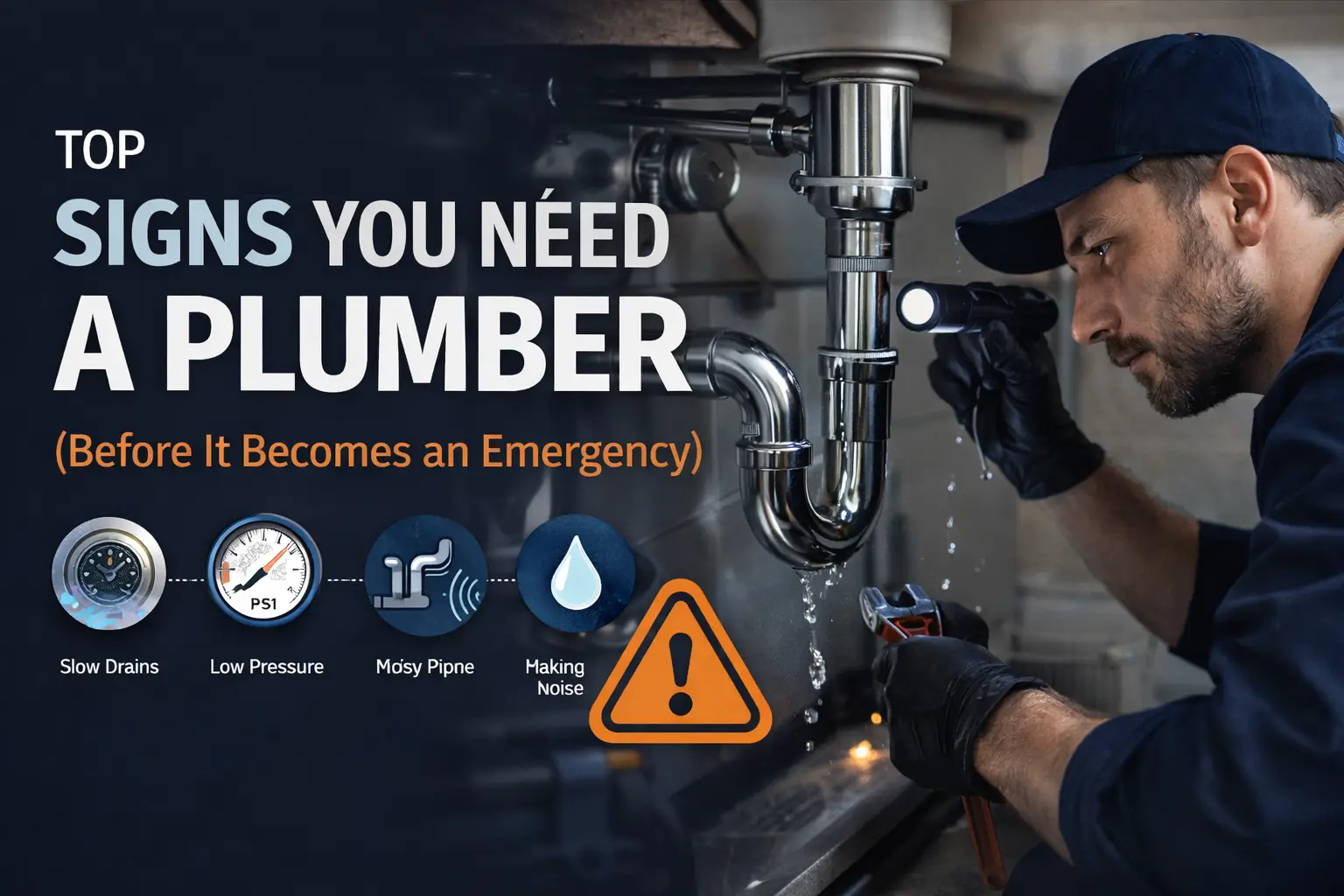
The problem is, many plumbing issues start small. A slow drain, a slight drop in water pressure, or an occasional noise in your pipes may not seem urgent, but these are often early warning signs. Ignoring them can lead to costly repairs, water damage, or even full system failure.
Understanding the signs you need a plumber can help you act early, save money, and protect your home. In this guide, we’ll break down the most common indicators that something isn’t right—and when it’s time to call a professional.
Why Early Plumbing Warning Signs Matter
Plumbing systems are interconnected. What starts as a minor issue in one area can quickly affect your entire home.
Small problems often lead to:
- Increased water bills due to hidden leaks
- Structural damage from prolonged moisture
- Mold and mildew growth
- Reduced efficiency in fixtures and appliances
Catching these issues early allows for simpler, more affordable repairs instead of emergency situations.
1. Slow Drains That Keep Coming Back
A slow drain is one of the most common plumbing complaints—but it’s also one of the most overlooked.
While a single clog may be easy to fix, recurring slow drainage often signals a deeper issue within your plumbing system.
What it could mean:
- Buildup in pipes (grease, soap, debris)
- Tree root intrusion in sewer lines
- Partial blockages deeper in the system
If multiple drains in your home are slow, it may indicate a larger problem in your main line.
For a deeper breakdown, see: /slow-drain-warning-signs-plumbing-issue
2. Low Water Pressure Throughout the Home
Low water pressure can be frustrating—but it’s also a sign that something isn’t functioning properly.
Common causes include:
- Hidden leaks
- Pipe corrosion
- Mineral buildup
- Issues with your main water supply
If the pressure drop happens suddenly or affects multiple fixtures, it’s time to investigate further.
Learn more here: /low-water-pressure-causes-and-fixes
3. Strange Noises Coming From Pipes
Your plumbing system should operate quietly. If you start hearing unusual sounds, it’s often a sign of internal issues.
Common plumbing noises:
- Banging (water hammer): Sudden pressure changes
- Gurgling: Air trapped due to blockages
- Whistling: High pressure or valve issues
Ignoring these sounds can lead to pipe damage or long-term system wear.
Read more: /noisy-pipes-banging-gurgling-causes
4. Unexplained Water Stains or Damp Areas
Water stains on ceilings, walls, or floors are a clear sign that something is wrong—but the source isn’t always obvious.
Warning signs to look for:
- Discoloration on drywall or ceilings
- Peeling paint or bubbling surfaces
- Musty odors or mold growth
- Warped flooring
These symptoms often point to hidden leaks behind walls or under floors, which can worsen over time.
Full guide: /hidden-water-leak-warning-signs-home
5. Sudden Increase in Your Water Bill
If your water usage hasn’t changed but your bill has increased, your plumbing system may be the reason.
Possible causes:
- Undetected leaks
- Running toilets
- Dripping faucets
- Underground pipe issues
Even a small leak can waste hundreds of gallons of water over time.
6. Frequent Clogs or Backups
Occasional clogs are normal—but frequent issues are not.
Signs of a bigger problem:
- Repeated toilet clogs
- Water backing up in sinks or tubs
- Multiple fixtures clogging at once
This could indicate a blockage in your main sewer line, which requires professional attention.
7. Water Heater Issues
Your water heater is a critical part of your plumbing system. When it starts failing, you’ll notice changes quickly.
Warning signs:
- Inconsistent water temperature
- Rust-colored water
- Strange noises from the tank
- Reduced hot water supply
Delaying repairs can lead to complete system failure or leaks.
DIY Fix or Call a Plumber?
Some plumbing issues can be handled with basic tools—but others require professional expertise.
You may be able to DIY:
- Minor clogs
- Faucet replacements
- Basic maintenance
You should call a plumber if:
- The problem keeps coming back
- Multiple fixtures are affected
- There are signs of leaks or water damage
- You’re dealing with pipes, sewer lines, or water heaters
Learn how to decide: /diy-vs-professional-plumber-when-to-call
How Ignoring Plumbing Issues Can Cost You More
Waiting too long to address plumbing problems often leads to:
- Emergency service costs
- Major repairs or replacements
- Property damage
- Health risks from mold and bacteria
Proactive maintenance and early intervention are always more cost-effective.
Preventative Tips to Avoid Plumbing Problems
A few simple habits can help you avoid many common plumbing issues:
- Avoid pouring grease down drains
- Use drain strainers to catch debris
- Schedule routine inspections
- Monitor water pressure levels
- Address small issues before they escalate
Prevention is the key to maintaining a reliable plumbing system.
Know the Signs, Act Early
Your home’s plumbing system gives you warning signs before major problems occur—you just need to recognize them.
From slow drains and low pressure to hidden leaks and unusual noises, these indicators should never be ignored. Acting early can save you time, money, and stress while protecting your home from serious damage.
If you’re noticing any of these issues, it may be time to consult a professional and ensure your plumbing system is working as it should.
Need help with a plumbing issue?
Don’t wait until a small problem becomes a major repair. A professional plumber can diagnose the issue quickly and provide the right solution to keep your home running smoothly.