


Introduction
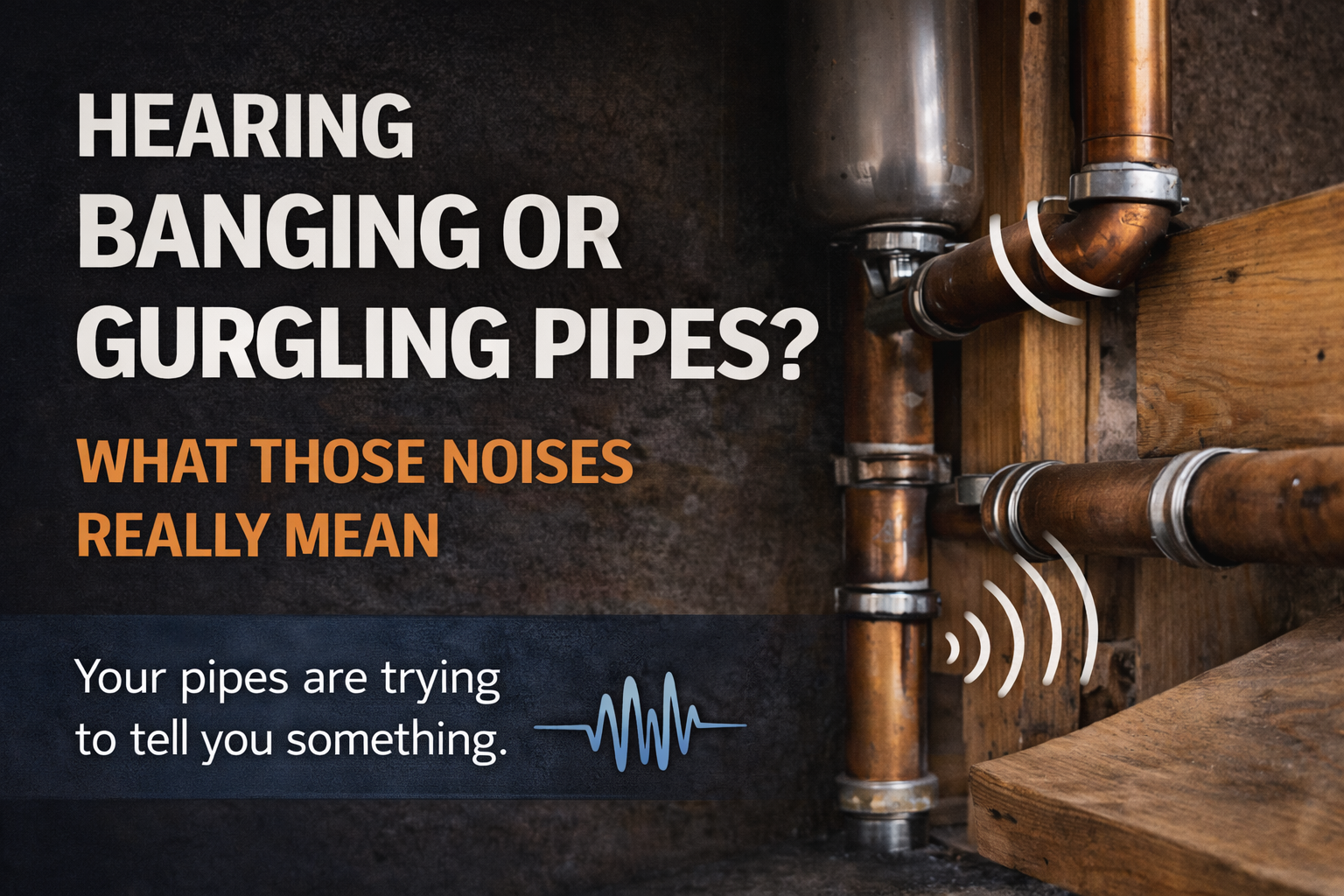
Your plumbing system isn’t supposed to make noise.
If you’re hearing banging, gurgling, whistling, or rattling sounds coming from your pipes, it’s not just an annoyance—it’s often a warning sign that something isn’t functioning properly.
These noises can indicate pressure problems, blockages, or even structural issues within your plumbing system. Ignoring them can lead to pipe damage, leaks, or more serious repairs down the line.
If your pipes are making unusual sounds, it could be one of the early signs you need a plumber.
/signs-you-need-a-plumber
Why Do Plumbing Pipes Make Noise?
Plumbing systems are designed to move water smoothly and quietly. When something disrupts that flow—whether it’s air, pressure changes, or blockages—you’ll start to hear it.
Noise is usually caused by:
- Sudden changes in water pressure
- Air trapped in the pipes
- Loose or unsecured pipes
- Obstructions affecting water flow
Understanding the type of noise you’re hearing can help identify the underlying issue.
Common Types of Pipe Noises and What They Mean
Different sounds point to different problems. Here’s what to listen for:
1. Banging Pipes (Water Hammer)
A loud banging or knocking sound—especially when turning off a faucet—is commonly known as “water hammer.”
This happens when:
- Water flow suddenly stops
- Pressure surges through the pipes
- Pipes move or shake due to force
Over time, this can:
- Damage pipe joints
- Loosen fittings
- Lead to leaks
2. Gurgling Sounds
Gurgling noises usually come from drains or toilets and often indicate trapped air in the system.
This can be caused by:
- Partial blockages
- Venting issues
- Developing clogs
If left untreated, gurgling can lead to slow drains or backups.
Learn more about related issues here:
/slow-drain-warning-signs-plumbing-issue
3. Whistling or Screeching Sounds
High-pitched noises often come from fixtures like faucets or valves.
Common causes include:
- Worn-out washers or seals
- High water pressure
- Faulty valves
These sounds may start small but can worsen over time.
4. Rattling Pipes
If pipes shake or rattle when water is running, they may not be properly secured.
This can result from:
- Loose pipe brackets
- High water pressure
- Poor installation
Rattling pipes can eventually lead to wear and damage if not addressed.
5. Constant Running or Humming Sounds
If you hear a continuous sound even when no water is being used, it could indicate:
- A hidden leak
- A running toilet
- A pressure imbalance
This should be investigated promptly to avoid water waste and damage.
When Pipe Noises Indicate a Bigger Problem
Not all plumbing noises are urgent—but some should never be ignored.
Warning signs include:
- Noises that are getting louder over time
- Sounds coming from multiple areas of the home
- Noise combined with other issues like low pressure or slow drains
- Sudden changes in how your plumbing system behaves
For example:
- Low pressure + noise may indicate a leak
- Gurgling + slow drains may signal a blockage
Explore related issues here:
/low-water-pressure-causes-and-fixes
What Happens If You Ignore Noisy Pipes?
Ignoring unusual sounds can lead to more serious problems over time.
Potential consequences include:
- Pipe damage or bursts
- Leaks behind walls or under floors
- Increased water bills
- Structural damage from ongoing issues
What starts as a noise can quickly turn into a costly repair if left unchecked.
DIY Fixes for Minor Pipe Noises
Some pipe noises can be resolved with simple adjustments.
You can try:
- Tightening loose pipe brackets
- Reducing water pressure if it’s too high
- Replacing worn washers or seals
- Checking for partially closed valves
These fixes may help with minor issues—but they won’t solve deeper problems.
When to Call a Professional Plumber
If the noise persists or you’re unsure of the cause, it’s best to call a professional.
You should contact a plumber if:
- The noise is loud or worsening
- You can’t identify the source
- Multiple plumbing issues are happening at once
- You suspect pressure or structural problems
A professional can:
- Diagnose the exact cause
- Prevent further damage
- Ensure your plumbing system is operating safely
If you’re unsure, refer to this guide:
/diy-vs-professional-plumber-when-to-call
How Plumbers Fix Noisy Pipes
Depending on the issue, plumbers may use different solutions:
- Installing water hammer arrestors
- Securing loose pipes
- Adjusting pressure levels
- Clearing blockages
- Repairing or replacing damaged components
Proper diagnosis ensures the issue is fixed correctly—not just temporarily.
How to Prevent Pipe Noises
Preventative maintenance can help keep your plumbing system quiet and efficient.
Best practices include:
- Monitoring water pressure levels
- Securing exposed pipes
- Scheduling regular inspections
- Addressing small issues early
A well-maintained plumbing system should operate smoothly and quietly.
Listen to What Your Pipes Are Telling You
Unusual plumbing noises are your home’s way of signaling that something isn’t right.
Whether it’s a minor issue or a sign of a larger problem, paying attention early can prevent damage, reduce costs, and keep your plumbing system functioning properly.
If your pipes are making noise, it’s worth investigating before the issue becomes more serious.
Hearing strange noises in your plumbing system?
Don’t ignore the warning signs. A professional inspection can identify the cause and prevent bigger, more expensive problems down the line.