


Introduction
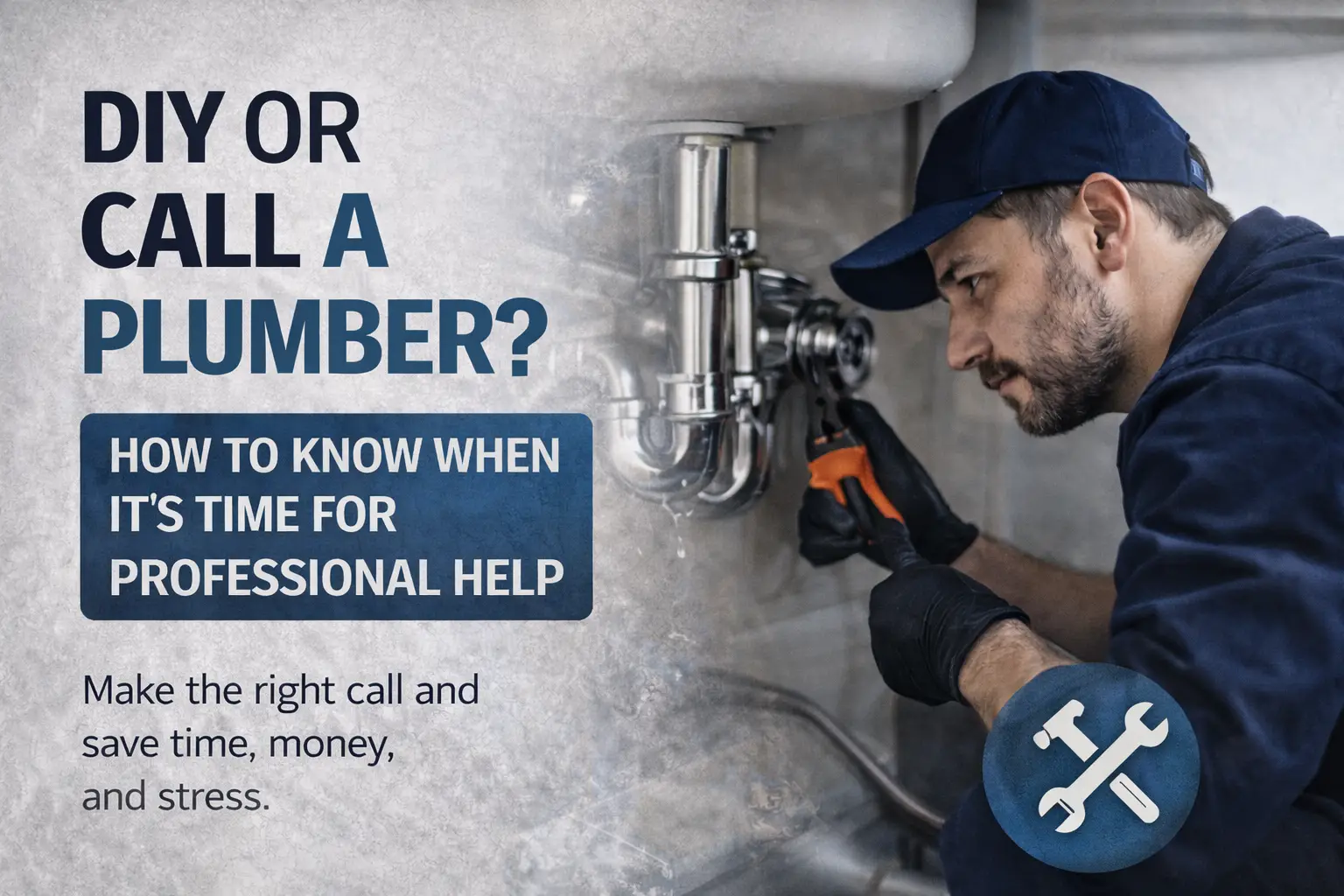
When a plumbing issue comes up, one of the first questions homeowners ask is:
Should I fix this myself, or call a plumber?
With so many DIY tutorials and quick fixes available, it’s tempting to handle problems on your own. And in some cases, that’s perfectly fine. But other times, trying to fix it yourself can make the issue worse—leading to bigger repairs and higher costs.
Knowing the difference between a simple fix and a serious problem is key.
If you’re unsure, start with the full overview of signs you need a plumber:
/signs-you-need-a-plumber
When DIY Plumbing Makes Sense
Not every plumbing issue requires professional help. Some minor problems can be handled safely with basic tools and a little knowledge.
Common DIY-friendly tasks:
- Clearing minor clogs with a plunger
- Cleaning faucet aerators or showerheads
- Replacing a showerhead or faucet
- Tightening loose fittings
- Basic drain maintenance
These tasks are typically low-risk and don’t require specialized equipment.
The Risks of DIY Plumbing
While DIY can save money upfront, it also comes with risks—especially if the issue is more complex than it appears.
Common problems with DIY attempts:
- Misdiagnosing the issue
- Using the wrong tools or methods
- Damaging pipes or fixtures
- Making the problem worse over time
For example, using chemical drain cleaners repeatedly can corrode pipes and lead to more serious damage.
Clear Signs You Should Call a Plumber
Some plumbing issues should never be handled without professional help.
1. The Problem Keeps Coming Back
If you fix something and it returns shortly after, the root cause hasn’t been addressed.
This is common with:
- Recurring clogs
- Ongoing leaks
- Repeated pressure issues
Learn more about recurring drain issues here:
/slow-drain-warning-signs-plumbing-issue
2. Multiple Fixtures Are Affected
When more than one area of your home is experiencing issues, it usually points to a system-wide problem.
This could include:
- Sewer line blockages
- Main water line issues
- Pressure imbalances
DIY fixes won’t solve these types of problems.
3. You Suspect a Leak
Leaks can cause serious damage—even if they’re small.
Signs include:
- Water stains
- Musty odors
- Increased water bills
Hidden leaks require proper detection tools and should be handled by professionals.
Learn more here:
/hidden-water-leak-warning-signs-home
4. Low Water Pressure Throughout the Home
If pressure is low in multiple fixtures, the issue is likely deeper in your system.
Possible causes include:
- Leaks
- Pipe corrosion
- Pressure regulator issues
Explore this further:
/low-water-pressure-causes-and-fixes
5. Strange Noises in Your Plumbing
Unusual sounds like banging or gurgling can indicate pressure problems or blockages.
These issues often require:
- Specialized tools
- System adjustments
- Professional diagnosis
Learn more here:
/noisy-pipes-banging-gurgling-causes
6. You’re Dealing With Major Components
Certain parts of your plumbing system should always be handled by professionals.
This includes:
- Water heaters
- Sewer lines
- Main water lines
- Pipe replacements
These systems are complex and mistakes can be costly.
The Cost of Waiting Too Long
One of the biggest mistakes homeowners make is waiting too long to call a plumber.
What starts as a small issue can quickly become:
- A major repair
- An emergency situation
- A costly replacement
For example:
- A small leak can turn into water damage
- A slow drain can become a full backup
- Pressure issues can lead to pipe failure
Acting early almost always saves money.
How Professional Plumbers Solve Problems
Hiring a professional doesn’t just fix the issue—it ensures it’s done correctly.
What a plumber brings:
- Accurate diagnosis of the root cause
- Proper tools and equipment
- Long-term solutions instead of temporary fixes
- Prevention of further damage
This reduces the risk of repeat problems and gives you peace of mind.
How to Make the Right Decision
If you’re unsure whether to DIY or call a plumber, ask yourself:
- Is this a recurring issue?
- Are multiple fixtures affected?
- Could this cause damage if done incorrectly?
- Do I fully understand the problem?
If the answer raises any doubt, it’s usually best to call a professional.
Preventative Approach: The Best Strategy
The best way to avoid difficult decisions is to prevent problems before they happen.
Smart habits include:
- Regular plumbing inspections
- Addressing small issues early
- Avoiding harmful materials in drains
- Monitoring water pressure and usage
Preventative care reduces the need for emergency repairs.
Know Your Limits and Protect Your Home
DIY plumbing has its place—but it’s not the right solution for every situation.
Knowing when to handle a problem yourself and when to call a professional can save you time, money, and stress. More importantly, it protects your home from unnecessary damage.
If something doesn’t feel right, it’s better to get expert help than risk making the problem worse.
Not sure if your plumbing issue needs a professional?
Don’t take chances with your home. A quick inspection can identify the problem and give you the right solution—before it turns into something bigger.