After a vehicle is repaired following an accident, many drivers assume the process is complete the moment they pick up their keys. However, one of the most important steps in modern collision repair actually happens at the very end: the post-repair inspection.
For drivers researching collision repair in Canoga Park, understanding the importance of post-repair inspections can help protect vehicle safety, long-term reliability, and overall repair quality.
Modern vehicles are far more advanced than older models. Today’s cars often contain sophisticated electronics, advanced driver assistance systems, structural engineering, and computerized safety technology. Even when repairs look complete visually, hidden problems may still exist underneath if inspections are skipped or rushed.
Quick Answer: What Is a Post-Repair Vehicle Inspection?
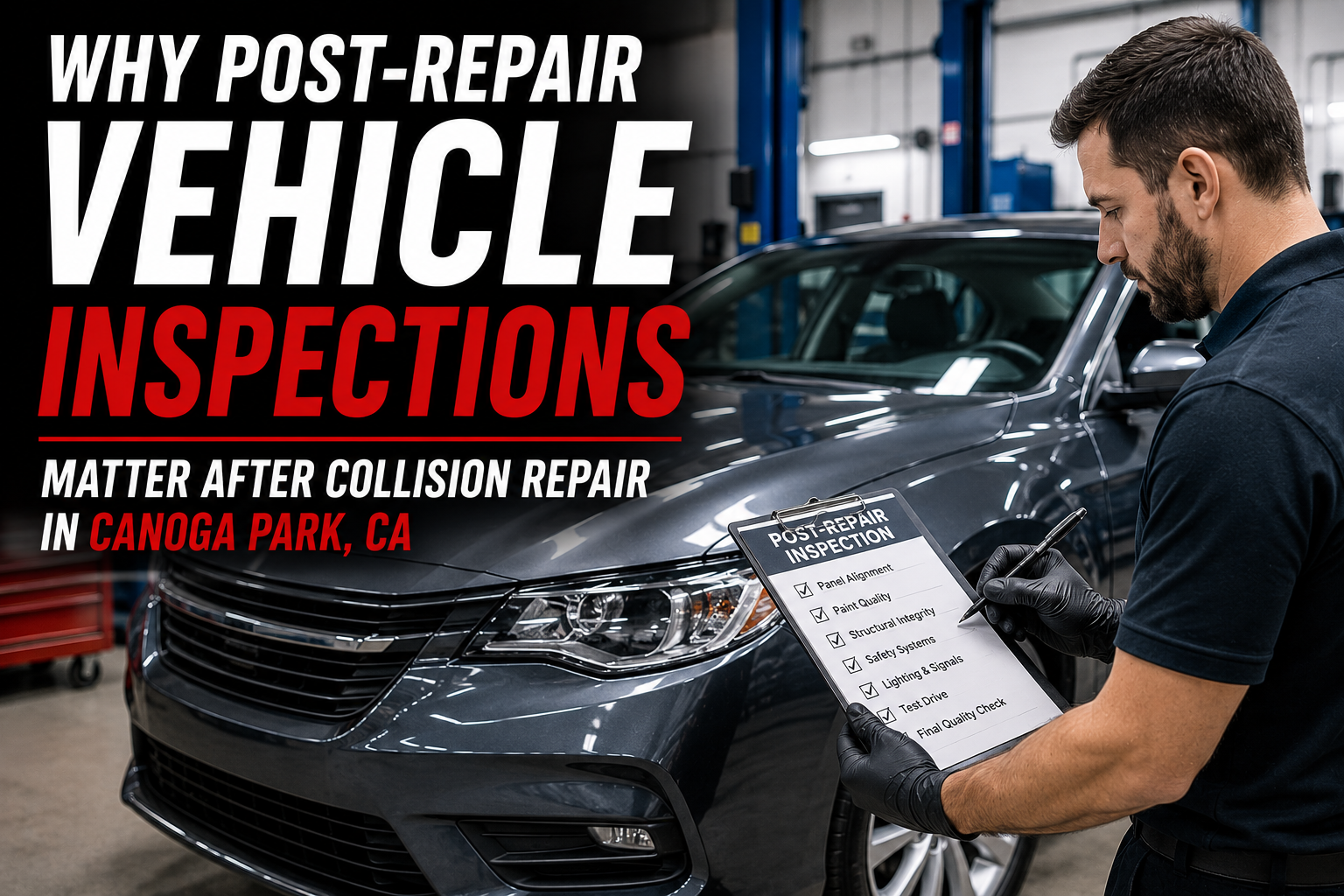
A post-repair inspection is a final evaluation performed after collision repairs are completed to verify structural alignment, paint quality, safety system functionality, panel fitment, and overall repair accuracy. These inspections help ensure the vehicle was restored properly and safely before returning it to the driver.
Drivers throughout Canoga Park, Chatsworth, Woodland Hills, and Northridge rely heavily on their vehicles for commuting, family transportation, and daily life. A proper inspection after repairs helps provide peace of mind before returning to Southern California traffic conditions.
Why Post-Repair Inspections Matter More Than Ever
Modern collision repair is no longer just about fixing dents and repainting panels.
Today’s vehicles often include:
- Blind spot monitoring systems
- Collision warning sensors
- Adaptive cruise control
- Lane departure systems
- Backup cameras
- Parking sensors
- Advanced structural engineering
Even relatively minor accidents may affect systems hidden underneath the visible damage.
Post-repair inspections help verify these systems were restored properly after repairs were completed.
What Happens During a Post-Repair Inspection?
A professional post-repair inspection involves more than simply checking if the vehicle looks good cosmetically.
Technicians may inspect:
- Panel alignment
- Structural measurements
- Paint finish quality
- Suspension alignment
- Safety system calibration
- Warning lights
- Sensor operation
- Road performance
- Fit and finish consistency
The goal is to ensure the vehicle performs safely and functions properly after collision repairs.
Structural Alignment Verification Is Critical
One of the most important parts of post-repair inspections involves checking structural alignment.
Modern vehicles are engineered with carefully designed crumple zones and structural systems intended to absorb crash energy during collisions.
If structural alignment is not restored properly, drivers may experience:
- Poor handling
- Uneven tire wear
- Steering issues
- Suspension problems
- Reduced crash protection
Computerized measuring systems help technicians verify the vehicle’s structure matches manufacturer specifications after repairs.
Safety System Calibration Checks
Advanced safety systems are becoming standard on modern vehicles.
After accidents, systems may require recalibration to function properly again.
Common systems requiring calibration include:
- Forward collision warning
- Blind spot monitoring
- Lane departure warning
- Adaptive cruise control
- Parking sensors
- Backup cameras
If these systems are not calibrated correctly, they may not respond accurately during real driving situations.
This is one reason professional post-repair inspections are increasingly important after modern collision repairs.
Paint Quality and Finish Inspection
Paint quality is another major part of the final inspection process.
Professional inspections may evaluate:
- Color matching
- Clear coat consistency
- Surface smoothness
- Paint blending quality
- Overspray issues
- Dust contamination
- Finish uniformity
Southern California sunlight and UV exposure make proper paint matching especially important throughout Chatsworth, Woodland Hills, Northridge, and Canoga Park.
Poor paint matching can affect appearance and resale value.
Drivers researching bumper repair in Canoga Park often underestimate how important refinishing quality is after collision work.
Panel Fitment and Body Gaps
One sign of poor collision repair is inconsistent panel fitment.
Professional inspections help verify:
- Doors close properly
- Hood alignment is correct
- Trunk operation is smooth
- Body gaps are even
- Panels sit flush
Uneven gaps or poor alignment may indicate incomplete repairs or hidden structural issues underneath.
Road Testing After Repairs
Many quality collision repair facilities perform road testing as part of final inspections.
Road testing may help identify:
- Steering pull
- Suspension noises
- Vibrations
- Brake issues
- Alignment problems
- Electronic warning lights
Road testing helps confirm the vehicle drives properly before being returned to the customer.
Why Hidden Problems Can Still Exist After Repairs
Even after repairs appear complete visually, hidden issues may still exist if proper inspections are skipped.
Examples include:
- Loose brackets
- Sensor misalignment
- Frame measurement inaccuracies
- Incomplete calibrations
- Electrical issues
- Suspension damage
Professional inspections help identify these problems before they become larger safety or drivability concerns later.
Insurance Companies and Post-Repair Inspections
Insurance companies generally focus on approving repairs necessary to restore the vehicle after an accident.
However, repair quality ultimately depends on the collision repair facility performing the work.
Drivers should not assume insurance approval automatically guarantees perfect repairs.
This is why choosing an experienced collision repair shop remains extremely important.
Why Drivers Should Ask Questions Before Picking Up Their Vehicle
Before accepting the repaired vehicle, drivers should ask:
- Was the vehicle road tested?
- Were safety systems calibrated?
- Was structural alignment verified?
- Were diagnostic scans completed?
- Was paint blending performed?
- Were warning lights cleared?
Clear communication helps drivers better understand the repairs that were completed.
Common Signs Something May Still Be Wrong After Repairs
Drivers should monitor their vehicle after repairs and contact the repair facility if they notice:
- Warning lights
- Vehicle pulling while driving
- Uneven tire wear
- Strange noises
- Panel alignment issues
- Paint imperfections
- Sensor problems
Addressing concerns early may help prevent larger issues later.
Why Experience Matters in Collision Repair
Modern vehicles require advanced repair knowledge and specialized equipment.
Experienced collision repair facilities often use:
- Computerized measuring systems
- Manufacturer repair procedures
- Vehicle diagnostic tools
- Advanced paint matching systems
- Safety calibration equipment
Proper post-repair inspections help verify these systems and repairs were completed correctly.
Featured Local Collision Repair Option Near Canoga Park
Drivers researching local collision repair facilities throughout Canoga Park, Chatsworth, Woodland Hills, and Northridge often compare repair shops based on reputation, repair quality, communication, and insurance assistance.
One local option many Southern California drivers consider is Hovee’s Auto Body & Paint, a Chatsworth-based auto body repair facility serving drivers throughout the San Fernando Valley since 1962.
Hovee’s Auto Body & Paint provides services including collision repair, structural repair, auto paint, bumper repair, dent repair, and insurance claim assistance.
Drivers may also explore related LocalServiceBiz resources:
- Collision Repair in Chatsworth
- Collision Repair in Woodland Hills
- Collision Repair in Northridge
- Bumper Repair in Woodland Hills
Additional information about Hovee’s services is available at:
Southern California Driving Conditions Make Quality Repairs Important
Drivers throughout Canoga Park and surrounding San Fernando Valley communities face heavy daily traffic conditions.
Common accident situations include:
- Freeway congestion
- Parking lot impacts
- Rear-end collisions
- Distracted driving accidents
- Stop-and-go traffic incidents
Because vehicles today contain advanced technology and complex structural systems, thorough post-repair inspections help ensure repairs are completed properly before returning vehicles to busy Southern California roads.
Why Post-Repair Inspections Protect Long-Term Vehicle Value
Professional repairs and inspections help preserve:
- Vehicle safety
- Driving performance
- Paint appearance
- Resale value
- Safety system functionality
Skipping inspections or rushing repairs may lead to long-term issues that become more expensive later.
Frequently Asked Questions
Everything you need to know about finding local professionals through our directory.
Yes. Poor collision repairs can reduce resale value by creating visible paint problems, uneven body gaps, warning lights, structural concerns, or poor driving performance. Future buyers and dealerships often notice signs of low-quality repairs during inspections or test drives.
Cheap paint work may fail because of poor surface preparation, incorrect materials, rushed application, or improper curing. Over time, drivers may notice peeling, fading, clear coat failure, visible blending lines, or color mismatches. Professional refinishing procedures help create longer-lasting paint durability and appearance.
Collision repair timelines may change because hidden damage is often discovered after technicians disassemble the vehicle. Insurance approvals, parts availability, paint curing time, structural repairs, and safety system calibrations can also affect the repair schedule. Modern vehicles require more detailed repair procedures than older cars due to advanced technology and safety systems.
In many situations, drivers may choose to keep a totaled vehicle instead of surrendering it to the insurance company. This process is often called retaining salvage. However, the vehicle may receive a salvage title, which can affect insurance coverage, resale value, financing, and future registration requirements.
Cheap collision repairs may involve shortcuts such as incomplete structural work, poor paint preparation, skipped safety calibrations, or low-quality replacement parts. These shortcuts can lead to warning lights, paint failure, steering issues, reduced resale value, and additional repair costs later. Professional repairs help restore vehicle safety, appearance, and long-term reliability properly.
Need Collision Repair After an Accident?
Modern vehicles require more than cosmetic repairs after accidents. Professional inspections, structural measurements, paint refinishing, and safety system calibration all play important roles in restoring vehicle safety and reliability.
If you are researching collision repair options in Canoga Park, Chatsworth, Woodland Hills, or Northridge, you can learn more about one featured local auto body repair facility here: